Greg Grandin Quotes
Ronald Reagan, who led the larger New Right project of re-sanctifying U.S. foreign policy after its Vietnam disaccreditation, felt compelled to drape his support for Central American death squads in the rhetoric of American exceptionalism.
Grandin, Greg. Kissinger's Shadow: The Long Reach of America's Most Controversial Statesman. Metropolitan Books, 2015.


Wilson had been successful in getting money and arms to the Muslim Mujahedeen in Afghanistan to fight the Russians who had invaded and occupied the country. But the Russian armed helicopters gave the Russians control of most of the company. Wilson wanted to send Stingers to the Mujahedeen, but the agencies were worried that the missiles might fall into the hands of anti-American radical Muslims. It turned out that the agencies were correct and after the defeat of Russia, many of the Mujahedeen then, buoyed by their great victory over a Superpower, came after the United States and Western nations who were “occupying Islamic land”. The terrorist tactics, that the United States ignored when the Russians were the victims, became the major military and foreign policy problem of America and the West.


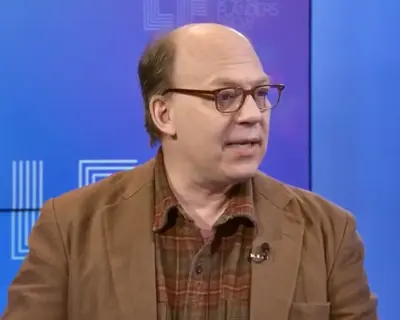
Greg Grandin (born 1962) is a professor of history at Yale University. He previously taught at New York University. He is author of a number of books, including Fordlândia: The Rise and Fall of Henry Ford's Forgotten Jungle City, which was a finalist for the Pulitzer Prize for History, as well as for the National Book Award and a National Book Critics Circle Award. A more recent book, entitled, Who Is Rigoberta Menchú?, focuses on the treatment of the Guatemalan Nobel Peace Prize winner. His 2014 book, The Empire of Necessity: Slavery, Freedom, and Deception in the New World, is a study of the factual basis for the novella Benito Cereno by Herman Melville.
