Karel Capek Quotes
Robots of the world, you are ordered to exterminate the human race. Do not spare the men. Do not spare the women. Preserve only the factories, railroads, machines, mines, and raw materials. Destroy everything else. Then return to work. Work must not cease.
Capek, Karel. R.U.R. (Rossum's Universal Robots). Translated by Paul Selver, Doubleday, Page & Company, 1923, p. 131.


This was the title of a science fiction play he wote in 1920. In it he coined the term "robot"


The Ad Hoc Committee was loosely affiliated with the Students for a Democratic Society.


One fascinating thing about this quotation is the date. It would be the next 150 years where the great scientific leaps would take place. There was no inkling of computers or nuclear weapons.

Samuel Langhorne Clemens, 1835-1910


In the1969 mission to the moon, the lunar module control computer flashed a Program Alarm warning message, and the Mission Control officer Steve Bates, with less than 30 seconds to go, had to make a decision whether to abort the module landing or continue. He spoke to Garman, who concluded that since the message did not repeat, that the message was most likely a spurious message—a false alarm. German told him to go ahead when most others wanted to abort. As Garman was the most familiar staff member with the software, Bates followed his lead and continued the landing. Garman was right and he became known as “The Man who saved the Moon Landing”.

There are two main interpretations of Hawking's statement: One that artifical beings will eventuall gain dominance and have no need for humans. The other is that humans will more and more incorporate computer technoliogy and powerful sensors into their bodies or eventually move human brains into artificial entities and the human race will evolve to the degree that our species as it exists now will no longer exists. Humans may well evolve themselves. It is not clear which of these views he leaned towards.


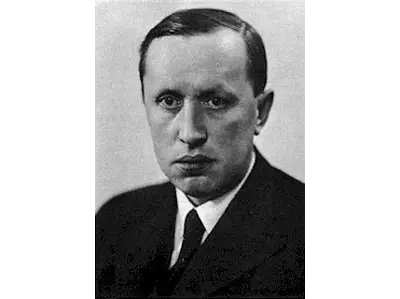
Karel Čapek was a Czech writer, playwright and critic. He has become best known for his science fiction, including his novel War with the Newts (1936) and play R.U.R. (Rossum's Universal Robots, 1920), which introduced the word robot. He also wrote many politically charged works dealing with the social turmoil of his time. Influenced by American pragmatic liberalism, he campaigned in favour of free expression and strongly opposed the rise of both fascism and communism in Europe.
