Wassily Leontief Quotes
The role of humans as the most important factor of production is bound to diminish in the same way that the role of the horse in agricultural production.
Wassily Leontief, Nobel Laureate in Economics, 1986
Sourced by: Eigen's Political and Historical Quotations

The implication is that we will be able to have cheaper products and cheaper services plus there will be less need for human efforts and few jobs needed and available.


In the Great Recession, the industrial production had improved much by 2012—the 4th year of the Obama administration. However, technology and automation were displacing workers. At the time, the U. S. was producing the same amount as before the Great Recession only it was being done with 5 million fewer workers.

Computers, robots have replaced many more American workers than those who lost their jobs by having them replaced by foreign labor. Ironically, even in counties like China, South Korea, and a number of others, have "liost" millions of jobs to automation thenselves.

Technology has always displaced and replaced workers, but most industrial technological breakthroughs, in the long run, have created new jobs and better paid ones. What worried Gompers did not appear to materialize in his lifetime, but actually became and issue on the later years of the 20th century and the early 21st century where the computer the robot, and the sophisticated software began to replace workers at a faster rate than new opportunities were created. Gompers was one of the harbingers of things to come.


The Ad Hoc Committee was loosely affiliated with the Students for a Democratic Society.


There were by then few jobs left in the American economy that did not require fundamental literacy and most required post secondary education as well.


His 50 year prediction was a little too optimistic although a large percentage of the routine, and some non-routine, jobs had become automated especially in the automobile and other manufacturing arenas, and many other fields. But there were still some other jobs that were still being done without machines in 2014. Asimov was essentially right but a little early in his timing.


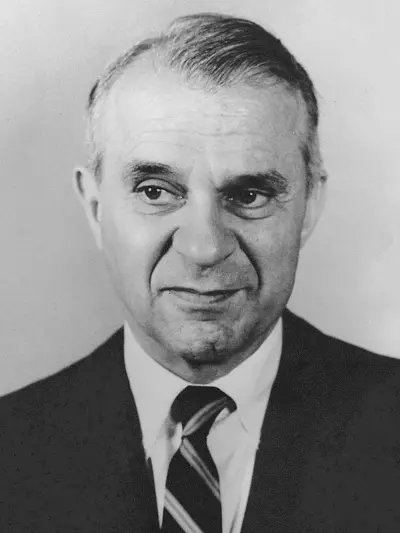
Wassily Wassilyevich Leontief, was a Soviet-American economist known for his research on input–output analysis and how changes in one economic sector may affect other sectors.
