Michael Crichton Quotes
Right now, scientists are in exactly the same position as Renaissance painters, commissioned to make the portrait the patron wants done, And if they are smart, they'll make sure their work subtly flatters the patron. Not overtly. Subtly.
Crichton, Michael. State of Fear. HarperCollins, 2004.


One classic example is the scientist who is testifying before a Congressional Committee. Typically if there is a political issue, the politician of each viewpoint will find a scientists who supports their view. In a huge country, they can always find on or two to support any idea regardless of its validity. In the world of science, the scientist who has been doing experiments in a field for years and has published articles in peer-reviewed journals, teaches other scientists who do outstanding work, and have won prizes or accolades from his/her peers is given much more credibility than the scientist who has none of these accomplishments and just may have a different point of view and claim that the first scientist is in error UNLESS the critical scientist can show mathematical or other scientific proof that the first is wrong. Often in politics, the lesser critical scientist offers questions which the leading scientist cannot answer bit in science that proves nothing. There is ALWAYS much more a scientists does NOT know about an area than he does know. See {623513}.
This unfortunately happens in Congress all the time. A good example is {640730}.


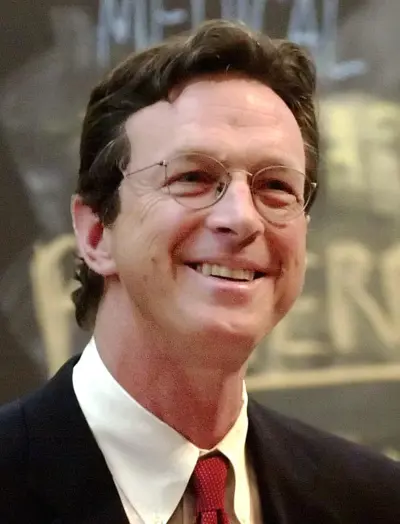
John Michael Crichton was an American author and filmmaker. His books have sold over 200 million copies worldwide, and over a dozen have been adapted into films. His literary works are usually within the science fiction, techno-thriller, and medical fiction genres, and heavily feature technology. His novels often explore technology and failures of human interaction with it, especially resulting in catastrophes with biotechnology. Many of his novels have medical or scientific underpinnings, reflecting his medical training and scientific background.
