Ignatius of Antioch Quotes
Reverence the deacons as you would the command of God.
Ignatius of Antioch. "Epistle to the Smyrnaeans." The Apostolic Fathers: Greek Texts and English Translations, edited and translated by Michael W. Holmes, 3rd ed., Baker Academic, 2007, ch. 8.


Philip II, by this statement, and his subsequent behavior, made a major step forward in France for the separation of church and state. Previously, French kings played a major part in the selection of the bishops and other high clerics of the realm. Phillip ceased that type of interference. He did however, close down a religious commune for misbehavior, but that was at the request of both the church and civil authorities. See {617074} . The religious authorities at the time were delighted with this form of separation of church and state, but they were adamant that their church should be able to influence the monarchy and laws of the realm. In contrast today, the Chinese government does not allow any religion to interfere with the operation of the government, but insists that the Dali Lama and the Bishops of the Catholic church can only be appointed with their approval. Separation of church and state is a two way phenomenon.


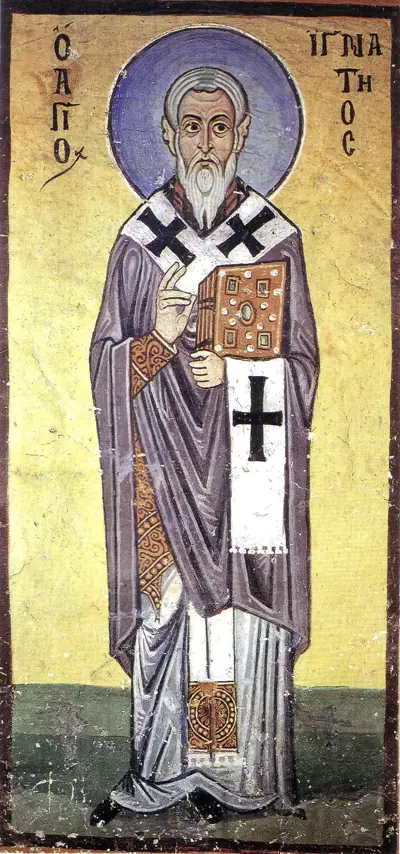
Ignatius of Antioch (/ɪɡˈneɪʃəs/; Greek: Ἰγνάτιος Ἀντιοχείας, Ignátios Antiokheías; died c. 108/140 AD), also known as Ignatius Theophorus (Ἰγνάτιος ὁ Θεοφόρος, Ignátios ho Theophóros, lit. "the God-bearing"), was an early Christian writer and bishop of Antioch. While en route to Rome, where he met his martyrdom, Ignatius wrote a series of letters. This correspondence now forms a central part of a later collection of works known to be authored by the Apostolic Fathers. He is considered to be one of the three most important of these, together with Clement of Rome and Polycarp. His letters also serve as an example of early Christian theology. Important topics they address include ecclesiology, the sacraments, and the role of bishops.
