Reinhold Niebuhr Quotes
Religion is so frequently a source of confusion in political life, and so frequently dangerous to democracy, precisely because it introduces absolutes into the realm of relative values.
Reinhold Niebuhr, 1892-1971, Theologian, Quoted in Arthur Schlesinger Jr., Forgetting Reinhold Niebuhr, New York Times Book Review, September 18, 2005
Sourced by: Eigen's Political and Historical Quotations


The Torah comprises the first 5 books of the Bible (Old Testament). The Arab countries of the Middle East are not alone in having to content with ultra-religious clerics who want to control the government and use it to impose religious law on the entire population. Israel also has the problem. In the Arab countries to deny being religion is to put yourself in danger including risking your life. So no one really knows what proportion of the population supports the religious imposition from the government. In Israel, however, this is easily determined by polls. The majority of Israelis are secular Jews. Of the religious Jews, the majority of them believe in extensive separation between the state and the religion. But there is a minority of ultra-orthodox which would have Israel to be a Theocracy. They are a minority but they are politically very strong. They receive large financial support from extremely wealthy Americans, have religious political parties, are extremely passionate advocates, and are willing to devote huge amounts of time to make Israel a more religious state and ideally a theocracy. Ironically, there is a great religious and philosophical similarity between the extremist Jews of Israel and the extremists Muslims in many of the Arab nations. They both want a theocracy. The only difference is which religion should the Theocracy represent.

Despite his recognition of this point, he too became an advocate of murdering religious opponents.


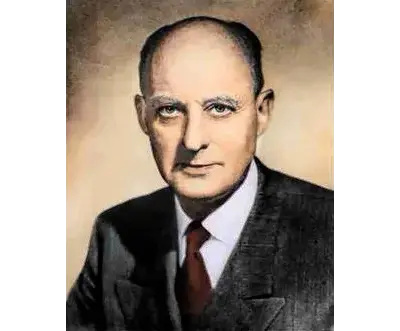
Karl Paul Reinhold Niebuhr (1892–1971) was an American Reformed theologian, ethicist, commentator on politics and public affairs, and professor at Union Theological Seminary for more than 30 years. Niebuhr was one of America's leading public intellectuals for several decades of the 20th century and received the Presidential Medal of Freedom in 1964. A public theologian, he wrote and spoke frequently about the intersection of religion, politics, and public policy, with his most influential books including Moral Man and Immoral Society and The Nature and Destiny of Man. The latter is ranked number 18 of the top 100 non-fiction books of the twentieth century by Modern Library. Andrew Bacevich labelled Niebuhr's book The Irony of American History "the most important book ever written on U.S. foreign policy." The historian Arthur Schlesinger Jr. described Niebuhr as "the most influential American theologian of the 20th century" and Time posthumously called Niebuhr "the greatest Protestant theologian in America since Jonathan Edwards."
