Adolfo Perez Esquivel Quotes
Reflection is only a partial understanding of truth if it does not translate itself in practice into commitments to the common good and justice. Truth is not mere abstraction but something to be done and is only apprehended when this is realized.
Esquivel, Adolfo Pérez. Christ in a Poncho: Testimonials of the Nonviolent Struggles in Latin America. Edited by Charles Antoine, translated by Robert R. Barr, Orbis Books, 1983.


He was very conservative in almost all things, but here and with the equality of women (see {638806}) he was far ahead of his time.

This is an amazing speech which illustrated the best of the development and growth of Islam. Note that: The ruler who has just been given ALL secular AND religious power admits candidly that he may not be the best qualified. This would not happen for over another 1000 years and even today is very rare in any society. In addition, he invites the citizens to correct him when he is wrong. Later, Calihs would, like the Christian kings and popes claim infallibiity and kill any who suggested otherwise. And daring to correct the ruler was capital offence for most of history and is even dangerous in some Muslim countries today. Last and perhaps most amazing, the new Caliph called for an affirmative leveling of the inequality of rights and power and announces it asa one of his major responsiblities. It is this kind of vision so unheard of at the time which shows us why so many flocked to Islam at the time. From a fairness, human rights, and accoutabiity of the ruler point of view Islam was the most modern of the religions then. Tragically, other forces shaped Islam for the next 1500 years and most Muslim countries become the least modern and its rulers are least accountable to the citizenry with none of the other rights and concept of fairness that Abu Bakr and other early Islamic leaders brought.
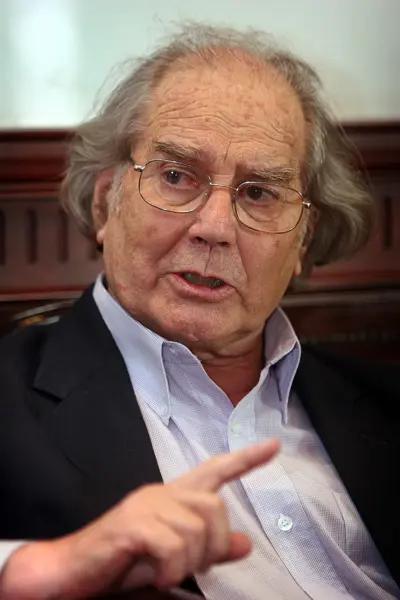
Adolfo Pérez Esquivel is an Argentine activist, community organizer, painter, writer and sculptor. He was the recipient of the 1980 Nobel Peace Prize for his opposition to Argentina's last civil-military dictatorship (1976–1983), during which he was detained, tortured, and held without trial for 14 months; during that period he also received, among other distinctions, the Pope John XXIII Peace Memorial.
