Charles E. Coughlin Quotes
(Referring to General Hugh Johnson, administrator of the National Recovery Administration:)) ... a comic opera cream puff.
The Priest was the right wing demagogic radio host of his day. Virulently anti-Semitic and anti-Black, he was threatened with excommunication by the Catholic Church, which finally ordered him to cease us weekly radio show and stop the political hate.
Charles E. Coughlin, 1891-1979, Catholic Priest, Union Party Co-founder, A Series of Lectures, 1934-1935
Sourced by: Eigen's Political and Historical Quotations


The President’s (William Howard Taft’s) wife was a college graduate and an ardent feminist who had played an active part in her husband’s affairs both as an advisor, and reviewer of speeches and other drafts as well as a public role {638463} especially in the Philippines where she was loved and admired by the populace and the elites. Shortly after her husband assumed the presidency, she had a very serious and debilitating stroke and never again served as a political advisor and confidant. There are many who correlate this with Taft’s presidency which was not very successful compared to his brilliant success at every other public position. The Tafts—unusual for the time—had always worked closely as a team, and then that ended, Taft’s public performance suffered.

The event that triggered the call was President Lyndon Johnson introducing the Voting Right Act. Russell had been a mentor to the young Johnson, a fellow Southerner who had voted against and blocked all civil rights legislation when he was in the House and Senate. However when he became President, his representation changed and he reverted to his pre-political views. {637651}


The best examples are Social Security and Medicare.

This was the statement that caused many senators to block her appointment as a Federal judge.
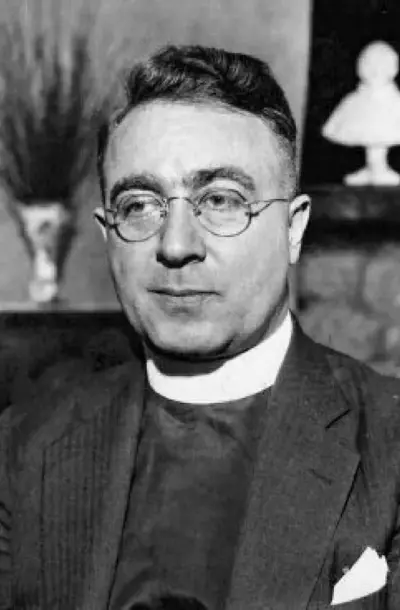
Charles Edward Coughlin, commonly known as Father Coughlin or the radio priest, was a Canadian-American Roman Catholic priest who was based in the United States near Detroit. He was the founding priest of the National Shrine of the Little Flower church. He was one of the first political leaders to use radio to reach a mass audience: during the 1930s, an estimated 30 million listeners tuned to his weekly broadcasts. He was forced off the air after his rhetoric became anti-Semitic and fascistic.
