Leon Panetta Quotes
Received phone call from Tom Donilon who stated that the President made a decision with regard to AC1 [Abbottabad Compound 1]. The decision is to proceed with the assault....The direction is to go in and get Bin Ladin and if he is not there, to get out. Those instructions were conveyed to Admiral McCraven at approximately 10:45 AM.
The raid commenced on 1 a.m. on May 2. The Seal team had been practicing for weeks. Bin Laden was brought to justice. This was the historical record of the President’s decision.
Leon Panetta, U. S. Congressman (Democrat, CA), Director, Office of Management and Budget, White House Chief of Staff, Director, CIA, Handwritten Memo he wrote, 10:35 a.m. on April 29, 2011
Sourced by: Eigen's Political and Historical Quotations

The “Principals Committee” is the senior interagency forum for consideration of policy issues affecting national security. It includes the National Security Director (Chair), the CIA Director, the Secretary of Defense and his Deputy, the Secretary of State and his Deputy, the Chairman of the Jount Chief’s of Staff, The Special Representative to the United Nations and other staff as invited. Clarke was almost always invited to these meeting when terrorism was discussed but he did not have a vote. This is a very important quotation for several reasons. First, it shows the influence that the Defense Department and CIA leaders had with President Bush before the 9-11 attack. It also illustrates dramatically how reluctant our military and CIA were to use drones. It was President Obama who overruled them and changed America policy to use Drones to protect American interests. It also indicates how there was a split regarding the perception of the danger of Al Qaeda and bin Laden with Clark and some of the other Principals placing more value on a military strike than the military and covert action leaders. This is not uncommon despite the fact that public perception is that it is always the military leaders who are the hawks. Also, it illustrates the problem of allowing the military point of view to always prevail in national policy making involving use of force. See {639322}.


He had continuously been accused of not going after the infamous terrorist who people were suspecting was hiding in Pakistan. The President had heard these reports but maintained that he did not know where bin Laden was. On this occasion he challenged his challenger.

36 days later, September 11, he did strike. See {617467} for some of the specific contents. The memo was kept secret by the Bush administration until public pressure as a result of the 9-11 Commission hearings forced the declassification and release. At that point it became clear that there was no reason that the memo could not have been released much earlier except that it was embarrassing. See {637530} and {637533} for two other Bin Laden Warnings that Bush and his team ignored.

Bush claimed he did not remember the conversation. His incoming National Security Advisor, Condoleezza Rice, was also briefed about bin Laden by the Clinton anti-terrorism director, Richard Clarke. The Bush Administration ignored the warnings until bin Laden struck on 9-11


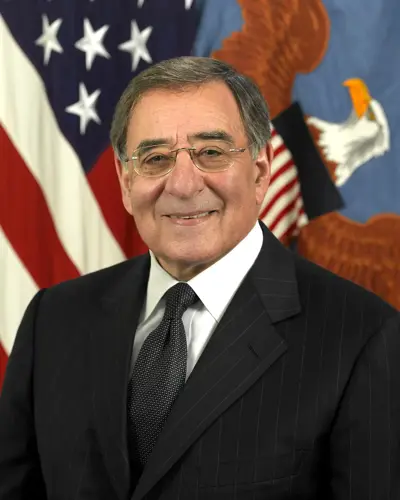
Leon Edward Panetta is an American politician who has served in several different public office positions, including the Secretary of Defense, Director of the CIA, White House Chief of Staff, Director of the Office of Management and Budget, and as a U.S. Representative from California. A Democrat, Panetta was a member of the United States House of Representatives from 1977 to 1993, served as Director of the Office of Management and Budget from 1993 to 1994, and as President Bill Clinton's Chief of Staff from 1994 to 1997. He co-founded the Panetta Institute for Public Policy and served as a Distinguished Scholar to Chancellor Charles B. Reed of the California State University System and as a professor of public policy at Santa Clara University.
