A. P. J. Abdul Kalam Quotes
Rameswaram has, since antiquity, been an important pilgrimage destination.
Kalam, A. P. J. Abdul, and Arun Tiwari. Wings of Fire: An Autobiography. Universities Press, 1999, p. 4.


This is the type of person who suicide bomber recruiters seek out.

Douglas was the first Black who had been a guest at an Inaugural Party. The President asked Douglas for his assessment of the Inaugural Address,

This happened to be the famous Colored Regiment depicted so well in the movie, Glory. However, these sentiments were also given to other soldiers in the state. Fighting against slavery was not only the patriotic thing to do, not only the humane thing, not inly the civilized thing to do, but it was a Christian Religious duty. Similar sendiment can be seen much in speeches and literature of the time. The words of the Battle Hymn of the Republic is another example. Ending slavery was a Holy requirement of God.

Carmichael was bombastic and many whites feared him and his organization. Lewis, however, a very religious young man however did much more to organize the critical Civil Rights Events and could communicate with all. After the peak of the Civil Rights movement, Carmichael lost much of his influence while Lewis was selected by the Blacks of Atlanta to represent them in Congress where he had a brilliant career—always the Christ-loving, mild-mannered leader who was supported by Christians and non-Christians alike.


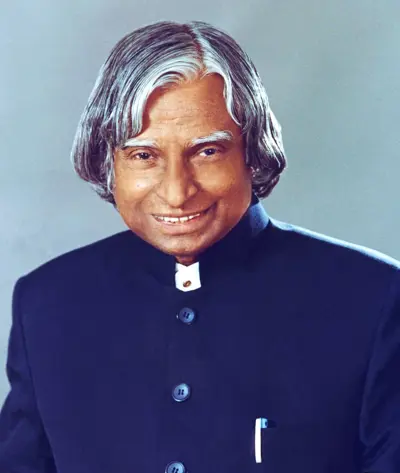
Avul Pakir Jainulabdeen Abdul Kalam was an Indian aerospace scientist and politician who served as the 11th President of India from 2002 to 2007. He was born and raised in Rameswaram, Tamil Nadu and studied physics and aerospace engineering. He spent the next four decades as a scientist and science administrator, mainly at the Defence Research and Development Organisation (DRDO) and Indian Space Research Organisation (ISRO) and was intimately involved in India's civilian space programme and military missile development efforts. He thus came to be known as the Missile Man of India for his work on the development of ballistic missile and launch vehicle technology. He also played a pivotal organisational, technical, and political role in India's Pokhran-II nuclear tests in 1998, the first since the original nuclear test by India in 1974.
