Stephen J. Field Quotes
Public policy forbids the maintenance of any suit in a court of justice, the trial of which would inevitably lead to the disclosure of matters which the law itself regards as confidential, and respecting which it will not allow the confidence to be violated. On this principle, suits cannot be maintained which would require a disclosure of the confidences of the confessional, or those between husband and wife, or of communications by a client to his counsel for professional advice, or of a patient to his physician for a similar purpose. Much greater reason exists for the application of the principle to cases of contract for secret services with the government.
Stephen J. Field, 1816-1899, U. S. Supreme Court Justice, Totten v. United States, 1875
Sourced by: Eigen's Political and Historical Quotations

This is the doctrine which allows the government to in effect quash any lawsuit which it claims will disclose any national secrets. This protects information that if released would harm the country or its security posture. At the same time, it allows an administration to terminate embarrassing lawsuits or ones that might uncover government illegality, by claiming that there will be damage to the nation. It is often difficult to separate damage to the nation from damage to a particular administration and government.


At the time Holland was a republic and a confederation of different states. There was an assembly of delegations from each of the States but most important decisions tended to be made by the Prince and a few of the representatives in his sway. Mathenesse was the delegate of the largest and wealthiest state but even others in his state delegation were out of the loop. Others claimed that the necessity of secrecy was just a pretext for a small group to dominate the republic. See {620069}. This battle goes on in almost every country including the United States where there are many matters in which only a few members of Congress and the President make decisions with national security given as the reason. In many cases there has been such a reason, but it is very easily corrupted into a pretext as only the people on the inside who get to make the decision know what the secret material was.

While many people hold that view today, in the 17th century this was truly a radical notion. There were NO democracies at the time and this philosopher argued that the citizens had a need to know that might supersede the need for the state to maintain secrets from enemies. Spinoza was one of the most feared intellectuals in human history-feared that is by the established power structures. He is the only known person who was excommunicated by the Catholics, the Jews and the Muslims-all were forbidden to read his works. He was the enemy of authority and advocated personal reason as the guide for men.


Trust is undermined in 2 ways. Allies and others who speak or negotiation with the government in confidence, lose trust in the government to maintain the appropriate level of confidentiality and security over information. And second, citizens lost trust in the government because they have been secretive and kept information from the citizenry that usually is just embarrassing or being kept secret to avoid opposition. Worst is when the leak shows that the Government has been lying to the public. Where there are what the public regards as legitimate secrets, public trust is not diminished, but those instances are not typical.


At the time there was no Secrecy & Classification System nor any laws enforcing secrecy or confidentiality. However there was no freedom of information laws of expectations even on the part of journalists. This was the first Freedom of Information policy of the American government. Some politicians were more open than others but there was no national, governmental before this. There were however leakers and whistleblowers though the terms were not in use. Note that Roosevelt herein created the first whistle blower protection—himself.
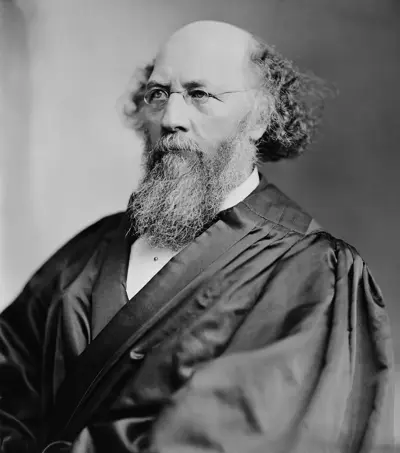
Stephen Johnson Field was an American jurist. He was an Associate Justice of the United States Supreme Court from May 20, 1863, to December 1, 1897, the second longest tenure of any justice. Prior to this appointment, he was the fifth Chief Justice of California.
