William Ellery Channing Quotes
Precept is instruction written in the sand; the tide flows over it and the record is gone; example is graven on the rock, and the lesson is not soon lost.
Channing, William Ellery. "The Sunday-School." The Works of William E. Channing, D.D., vol. 4, James Munroe and Company, 1841, p. 370.


The great politicians and educators consciously or unconsciously know this and act accordingly

Brunner and B. F, Skinner were the two most preeminent learning psychologists of the day. They were intellectual opponents, but both agreed with this principle, Amazing demonstrations of this principle are available throughout history. However, apparently the cost to do it can be huge and as of 2012 there has been no overall success on a large scale of the general proposition. On the other hand, set theory has been taught to Junior High School students well, and calculus is taught in many American high schools. However. while there are these spectacular results, the American education system of the early 21st century has been unable to produce basic arithmetic and algebra skills in over 20 percent of the population.


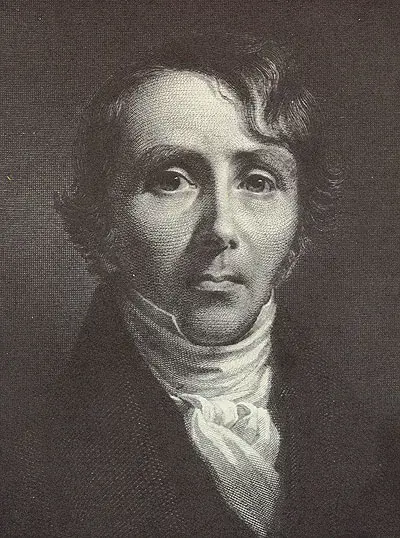
William Ellery Channing was the foremost Unitarian preacher in the United States in the early nineteenth century and, along with Andrews Norton (1786–1853), one of Unitarianism's leading theologians. Channing was known for his articulate and impassioned sermons and public speeches, and as a prominent thinker in the liberal theology of the day. His religion and thought were among the chief influences on the New England Transcendentalists although he never countenanced their views, which he saw as extreme. He espoused, especially in his "Baltimore Sermon" of May 5, 1819, given at the ordination of the theologian and educator Jared Sparks (1789–1866) as the first minister of the newly organized First Independent Church of Baltimore, the principles and tenets of the developing philosophy and theology of Unitarianism, leading to the organization in 1825 of the first Unitarian denomination in America (American Unitarian Association) and the later developments and mergers between Unitarians and Universalists, resulting finally in the Unitarian Universalist Association of America in 1961.
