Sharon Kay Penman Quotes
Poor Wales. So far from Heaven, so close to England.
Penman, Sharon Kay. The Reckoning. Henry Holt and Company, 1991.


This phrase is most likely taken from Bernard Shaw, see {47059}


The Southern authorities were particularly angry with people form the North coming South to demonstrate over unconstitutional and immoral segregation laws. Northerners were considered as having no business with Southern desegregation. Mrs. Peabody, and the wives of a number of wives of Christian Bishops, black and white, went to a restaurant in St. Augustine and requested service which was contrary to the segregation laws of Florida at the time. The women were arrested. The act of civil disobedience in integrating the restaurant was one act of a planned desegregation strategy worked out with Martin Luther King’s SCLC organization. The mature age of the women and their prominent husbands brought a great deal of newspaper coverage which is just what the demonstrators wanted. The photo is of Mrs. Peabody getting arrested. See {637404} and {637406} for more on this incident.


3rd Earl Russell of Kingston. At the time China was one of the poorest nations on earth, with a series of feeble politicians and leaders fighting each other for the ability to rob the people. Their ancient science and virtues had been forgotten and it was thought of by the West and Asians alike as a failed state. However, Russell observed this one characteristic that could be so important when the rest of the world was learning more and more about everything from science to history. The search for wisdom from wherever it may be also gave them an advantage over other cultures who were more chauvinistic about the origin of whatever they did or thought. Less than a century later China was a superpower, economically, artistically intellectually, scientifically and almost militarily. It only lagged democratically.

He was addressing the Conservatives of Ulster, the Northern Ireland province that was the center of the Orangemen movement of Irish Protestants who were fighting to retain 'Protestant Ascendency' -- which was the social, political and cultural domination of the Protestants (the minority) over the Catholics (the majority). This was best achieved by keeping Ireland a part of Great Britain as opposed to having Ireland as a separate, independent country.

This quotation shows the level of denial that De Valera and other Irish leaders were in over Nazi Germany. See {639721} for other Irish Free State denial. Over 70,000 Irishmen and women rejected the moral stand of their government, and volunteered for the British Army to the great distress of the Free State leaders like De Valera.

See {641733} for some background on the problem.

The concept of race then was not what it is today where it is, if anything, a genetic or anthropological distinction. Then race was a combination of blood (genetics) and culture. Wittgenstein, an Austrian by nationality, considered himself German racially. This concept of race was common in 1914 and rose to be absolute in the Nazi era. So the absorption of Austria by Germany did not seem to most Austrians a diminution of anything but a natural recognition of the unity of one people—the German race. Wittgenstein was not alone among intellectual “Germans” who believed the English “race” superior. Their ability to operate a democracy without a powerful leader was considered a great strength as was the diffusion of power and control were both admirable accomplishments which some German intellectuals envied.


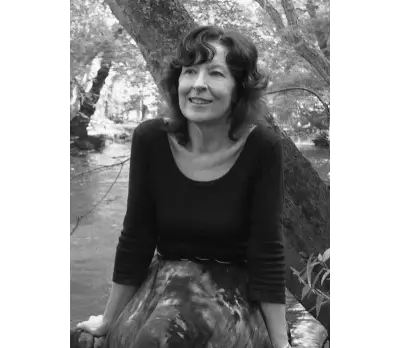
Sharon Kay Penman was an American historical novelist, published in the UK as Sharon Penman. She was best known for the Welsh Princes trilogy and the Plantagenet series. In addition, she wrote four medieval mysteries, the first of which, The Queen's Man, was a finalist in 1996 for the Best First Mystery Edgar Award. Her novels and mysteries are set in England, France, and Wales, and are about English and Welsh royalty during the Middle Ages. The Sunne in Splendour, her first book, is a stand-alone novel about King Richard III of England and the Wars of the Roses. When the manuscript was stolen she started again and rewrote the book.
