Goran Hyden Quotes
Political authority is problematic in Africa because of the blurry dividing line between the public and the private realm. Formal rules matter less than a series of informal institutions that regulate politics.
Goran Hyden, Political Scientist, African Politics in Comparative Perspective, 2005
Sourced by: Eigen's Political and Historical Quotations


The United States had just ousted the popularly elected leader Patrice Lumumba {640611}, and backed Mobuto. Lumumba was an idealist who was not corrupt at all, but were not so sure about our new protégé. Sadly he turned out to be one of the worst kleptocrats of all time, and he stole with more United States money than we gave to many nations in toto. Many believe that one of the reasons, corruption of our “allied” leaders was so bad lies in the wording of this cable. Note that to the State Department writers there was “normal” corruption as opposed to excessive corruption. Once that view is taken there is a constant battle to determine whether each new act of corruption is “normal “ or not, and corruption is simply lessened by pushing back against the most abnormal schemes. These critics advocate a zero tolerance for corruption especially with United States AID money. The State Department has been ambivalent and have often used the corruption system to bribe leaders to obtain national objectives.


See {626681} for the trigger of this comment.


While this was a terrific statement of the problem, Armenia was one of the more corrupt counties.


His sentiments after he began serving his jail sentence for conflict of interest.
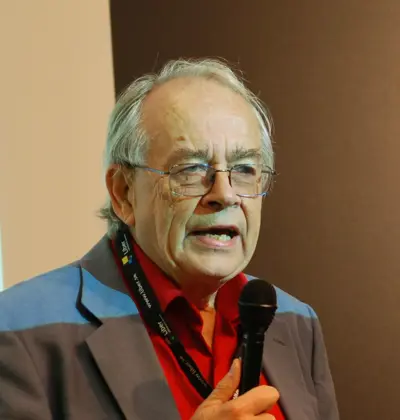
Göran Hydén (Born 1938) is a noted Africanist and Distinguished Professor of Political Science at the University of Florida. He was educated in his native Sweden at the University of Lund and at Oxford University and the University of California, Los Angeles (UCLA). He has also worked as an academic at various universities in East Africa including the University of Dar es Salaam, University of Nairobi, and Makerere University. He has researched a wide range of political economy issues related to development in general and Africa in particular. Such issues include: democratization; governance; sustainable development; the role of aid agencies. Hyden's approach has generally been critical of an emphasis on a narrowly defined poverty reduction rather than wider societal progress.
