Jose Marti Quotes
Perhaps the enemies of liberty are such only because they judge it by its loud voice.
Martí, José. Obras completas. Editorial de Ciencias Sociales, 1975.


Also inscribed inside the pedestal of the Statuary of Liberty.


The Kandahar region of Afghanistan was occupied by the Persians under Gurgin Khan. The Persians at the time were Shiite Muslims while the Afghans were Sunnis. Gurgin Khan forced all the Sunnis to convert to become Shia under threat of death. Mirwais Hotak led a force of freedom fighters, and defeated the Persians, killing Gurgin Khan in the process. There were some Afghan people who by collaborating with the Persians had done very well for themselves. They were anxious about their liberator and some were thinking about sneaking away and joining up with the Persians. He then made this speech, remarkable for any time, and especially so at the early 18th century. Notice, that unlike most other peoples of the Middle East, the Afghan’s placed a high value on freedom, and were willing to fight for it. In that sense, Afghanistan was culturally and politically different from the rest of the Islamic world.


See Joseph Addison which may have been the inspiration for this famous quote: {613374}.

The organization sent 2,100 volunteers to fight for South American independence from Spain.


Although Holland was more egalitarian and fairer than most nations of Europe, it was not quite as desirable as Diderot described it. He only visited a part of Holland that was the most educated and affluent.
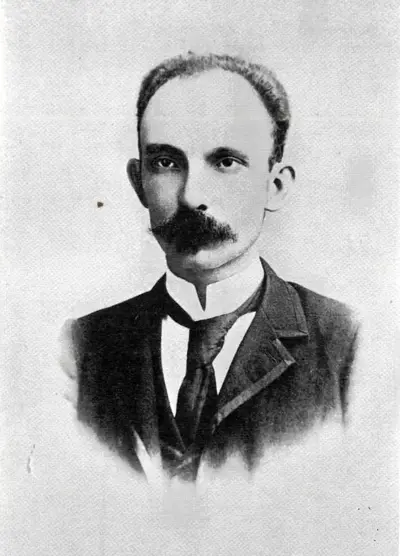
José Julián Martí Pérez was a Cuban poet, philosopher, essayist, journalist, translator, professor, and publisher, who is considered a Cuban national hero because of his role in the liberation of his country. He was also an important figure in Latin American literature. He was very politically active and is considered an important revolutionary philosopher and political theorist. Through his writings and political activity, he became a symbol of Cuba's bid for independence from the Spanish Empire in the 19th century, and is referred to as the "Apostle of Cuban Independence". From adolescence, he dedicated his life to the promotion of liberty, political independence for Cuba, and intellectual independence for all Spanish Americans; his death was used as a cry for Cuban independence from Spain by both the Cuban revolutionaries and those Cubans previously reluctant to start a revolt.
