Theodore Beza Quotes
Peoples did not in the first instance originate from rulers, but whatever peoples desired to be ruled by a single monarch or by chief men elected by them were anterior to their rulers. Hence it follows that peoples were not created for the sake of rulers, but on the contrary the rulers for the sake of the people.
Theodore Beza, 1519-1605, French theologian and educator, Successor to John Calvin, Concerning the Rights of Rulers Over Their Subjects and the Duty Of Subjects Towards Their Rulers
Sourced by: Eigen's Political and Historical Quotations


“Magistrates” at the time were rulers and heads of government and state. There was little or no separation of powers and the chief magistrate could make edicts and laws, enforce them and be the judge and jury as well. In the United States, the President is also called the “Chief Magistrate” even though his powers are only within the Executive Branch. For us today, “Magistrate” usually refers to a judge or other official of the Judicial Branch.


1st Earl of Beaconsfield

His army had been so successful that many of his men had all the riches they ever dreamed of and great glory as well. Some just wanted to slow down and enjoy the conquered lands where they had been received very cordially as Alexander’s “occupation” was much more benign than the Asian rulers had been. So some of Alexander’s men were critical of Alexander and in effect, Alexander said that the complaints are what a successful king should expect after so much success and popularity. This quotation was inscribed in Latin on the town-hall of Zittau, in Saxony during the reign of Frederick The Great. Politicians have been comforted by Alexander’s quotation even to modern times. Also, see {632232} for Voltaire’s version of Alexander’s statement.

When effective leaders do great things for their society which benefits as a result, there are usually some ingrates who will complain about the ruler or leader. When President William Clinton created a balanced budget and at the same time created more jobs than any other President in history, all with excellent growth rates and very low inflation, there were still those who complained about Clinton. The very successful rulers or politicians tend to produce what Voltaire called “ingrates”, but the leader’s behavior that produced the ingrate was noble. See Alexander the Great {632232} who seems to have first uttered this principle.
The offer of Darius was to pay him ten thousand talents, to cede to him all the countries west of the Euphrates, and to give him his daughter in marriage. Parmenio had urged him to take the offer. Alexander then went on and defeat Darius and the Persions who far outnumbered his forces. Asia then had one king who was more popular than Darius had been.


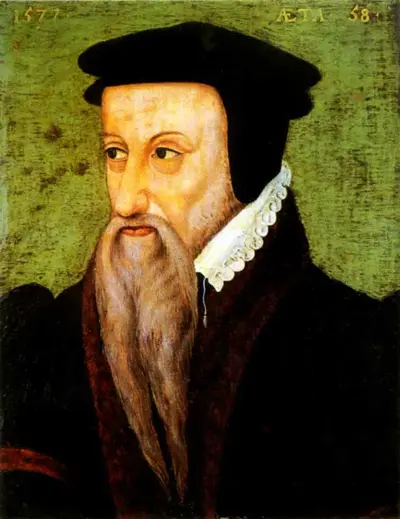
Theodore Beza was a French Reformed Protestant theologian, reformer and scholar who played an important role in the Reformation. He was a disciple of John Calvin and lived most of his life in Geneva. Beza succeeded Calvin as a spiritual leader of the Republic of Geneva, which was originally founded by John Calvin himself.
