Barry Schwartz Quotes
People who work in financial services don't have one shred of concern about the well-being of the people they serve. They're only interested in themselves.
Schwartz, Barry. Why We Work. Simon & Schuster, 2015.


See Oliver Stone {625339} for a modern, popular culture, icon of this idea. Several years after this interview, Black, with business interests in several countries, was convicted and served a jail sentence in the United States for fraud. His greed got the best of him.

His father Cornelius, one of the great, creative industrialists of America, was not at all of the same mindset and saw corporations and the Railroads as having an important role in America with substantial obligations to the society which enabled the economic development and supported the railroads. He described his son as a “blockhead”. William goes down in American history as the arrogant industrialist and capitalist whose wealth was produced by his talent of being born to the right father who built the great empire.

In 1811 Calhoun was a freshman congressman. Congress was considering raising 10,000 men to resist the encroachments of Great Britain. The large cost of the enterprise was preventing the measure from passing. Calhoun objected to considering the cost factor at all:


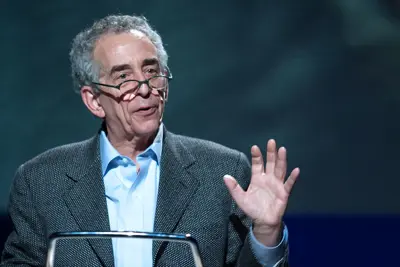
Barry Schwartz is an American psychologist. Schwartz is the Dorwin Cartwright Professor of Social Theory and Social Action at Swarthmore College and since 2016 has been visiting professor at the University of California, Berkeley. His work focuses on the intersection of psychology and economics. He frequently publishes editorials in The New York Times, applying his research in psychology to current events. Schwartz's research addresses morality, decision-making and the inter-relationships between behavioral science and society. His books criticize certain philosophical roots of (Western) societies and expose underlying myths common in both lay and academic psychological theories. In particular, he is a critic of the "rational economic man" model in both psychology and economics. Schwartz studied under David R. Williams for his PhD and the University of Pennsylvania.
