Earl Warren Quotes
I hate banks. They do nothing positive for anybody except take care of themselves. They're first in with their fees and first out when there's trouble.


The States sold bonds to finance the Revolutionary War. Some states had better prospects for redeeming their bonds than others. Georgia, South Carolina and North Carolina in particular had poorer prospects than most and their bonds were selling at about 25 cents on the dollar. Alexander Hamilton, then the Secretary of the Treasury, wanted the new Federal government to assume the state’s war debt and pay off the bonds. He made his proposal for how he would accomplish this on January 14, 1790. He delivered his report and proposal to Congress “Report on the Public Credit”. As soon as Hamilton’s proposal was read in Congress, sophisticated speculators set off for the Southern States to buy up as many bonds as they could before the owners found out that a Federal bail-out was under serious consideration. They could easily double, triple or even quadruple their money. To Jackson this was gross immorality. Other representatives had a different point of view. See {619928} & {619929}.

His father Cornelius, one of the great, creative industrialists of America, was not at all of the same mindset and saw corporations and the Railroads as having an important role in America with substantial obligations to the society which enabled the economic development and supported the railroads. He described his son as a “blockhead”. William goes down in American history as the arrogant industrialist and capitalist whose wealth was produced by his talent of being born to the right father who built the great empire.

Samuel Langhorne Clemens, 1835-1910. The nature of telephone technology made it easy for companies to obtain monopolies for different areas of the country. When there is a monopoly, there is a huge tendency for the controlling company to charge very high prices and have poor customer service as the usual competition required for quality performance under capitalism is nonexistant. So in 1890, there was the same resentment of the telephone companies, that existed over a century later when there was still a monopoly. Regulation helped somewhat, but the capabilities of the monopolist began to include lobbying and campaign contributions so that typically, in the 21st century, the local telephone companies had much control over the State Commissions that were supposed to regulate them. Long distance service, whose monopoly was broken up by the Federal Courts became a wonderful service for customers and the prices were a tiny fraction of what they had been under their old monopoly.

In 1811 Calhoun was a freshman congressman. Congress was considering raising 10,000 men to resist the encroachments of Great Britain. The large cost of the enterprise was preventing the measure from passing. Calhoun objected to considering the cost factor at all:


At this time it was 6 years after the Home Financing Crisis and the Meltdown of 2008 and despite tens of thousands of law violations by the bank, the Justice Department was finally finishing their investigations and requiring some penalties. Other negotiations with other banks were in progress, but no bank executives were going to jail for the millions they handled fraudulently, whereas a burglar who stole household goods would do jail time.


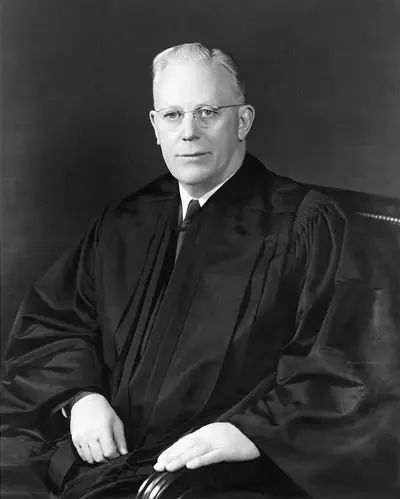
Earl Warren was an American politician and jurist who served as 30th governor of California from 1943 to 1953 and Chief Justice of the United States from 1953 to 1969. The "Warren Court" presided over a major shift in American constitutional jurisprudence, which has been recognized by many as a "Constitutional Revolution" in the liberal direction, with Warren writing the majority opinions in landmark cases such as Brown v. Board of Education (1954), Reynolds v. Sims (1964), Miranda v. Arizona (1966) and Loving v. Virginia (1967). Warren also led the Warren Commission, a presidential commission that investigated the 1963 assassination of President John F. Kennedy. He is the last chief justice to have served in an elected office before entering the Supreme Court, and is generally considered to be one of the most influential Supreme Court justices and political leaders in the history of the United States.
