Earl Warren Quotes
…people consider the things which government does for them to be social progress, but they consider the things the government does for others as socialism.
Earl Warren, 1891-1974, Chief Justice, U.S. Supreme Court, Governor of California (Republican), Republican Vice Presidential Candidate (with Dewey), Peter’s Quotations
Sourced by: Eigen's Political and Historical Quotations


The Civil Rights Act of 1964 This is a classic example of a twisted logic what was used for many years in the 20th century Red Scare in America. The International Communist Party was critical of the United States legal racial segregation as it was one of the great weaknesses of U. S. Capitalism for most people in the world. The American Communist party also echoed the party line. Almost all socialist organizations supported the Civil Rights Bill as well. Therefore argued Russell and most Southerners, it should be opposed as a Communist effort to weaken America. What they did not mention was that the majority of Democrats and Republicans supported the bill. That the vast majority of all the American churches and other religious organizations supported the bill, that Business groups all across the country wanted legal segregation ended. The only reason there was a long debate is that the Southerners used the filibuster where a small minority could block Senate legislation. But the American majority was so great for civil rights that the filibuster was defeated and the law passed which changed America forever.


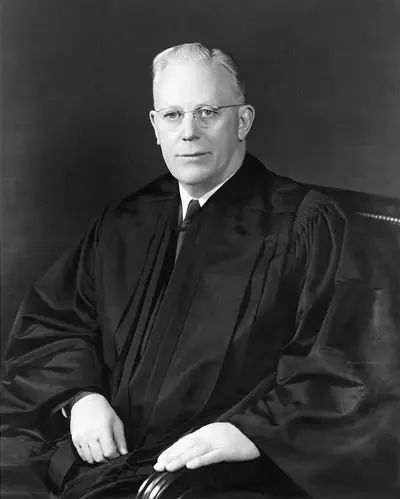
Earl Warren was an American politician and jurist who served as 30th governor of California from 1943 to 1953 and Chief Justice of the United States from 1953 to 1969. The "Warren Court" presided over a major shift in American constitutional jurisprudence, which has been recognized by many as a "Constitutional Revolution" in the liberal direction, with Warren writing the majority opinions in landmark cases such as Brown v. Board of Education (1954), Reynolds v. Sims (1964), Miranda v. Arizona (1966) and Loving v. Virginia (1967). Warren also led the Warren Commission, a presidential commission that investigated the 1963 assassination of President John F. Kennedy. He is the last chief justice to have served in an elected office before entering the Supreme Court, and is generally considered to be one of the most influential Supreme Court justices and political leaders in the history of the United States.
