Rebecca Harding Davis Quotes
Our young people have come to look upon war as a kind of beneficent deity, which not only adds to the national honor but uplifts a nation and develops patriotism and courage.
Davis, Rebecca Harding. Bits of Gossip. Houghton, Mifflin and Company, 1904, p. 124.


In one of the most unusual revolutions in world history, Brazil became independent from Portugal via a revolution led by the son of the Portuguese King and heir to the throne, Pedro I. The crown prince of Portugal, led Brazil in her breakaway from Portugal and by popular acclaim became Pedro I, Emperor of Brazil. He is probably the only monarch in history who was the heredity monarch of one kingdom and selected by popular acclaim to the throne of another.


Trumbo was morally opposed to war. He also refused to name Hollywood communists to Congressional Committees during the Red Scare. He was then blacklisted from his occupation, screen writing.


It is not clear whether their manifesto was written by D’annunzio himself or followers in Fiume the Dictatorial mini-state that he ruled, He was a precursor to the Fascists of Europe and this is the origin of the Fascist glorification of war. Hitler and Mussolini also picked up the dagger as a symbol (see Quotation 643744), the black colored uniforms and the stiff-armed salute from D’annunzio.

Public opinion in the Union was quite different and more complex. Eggleston was an accomplished writer who had served in the Confederate army of the Civil War. 20 year after the war he wrote a series of articles for the prestigious Northern Atlantic Monthly trying to convey the war from the Southerner’s point of view.


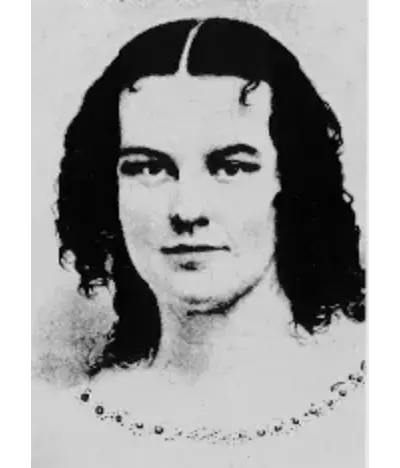
Rebecca Blaine Harding Davis was an American author and journalist. She was a pioneer of literary realism in American literature. She graduated valedictorian from Washington Female Seminary in Pennsylvania. Her most important literary work is the short story "Life in the Iron-Mills," published in the April 1861 edition of The Atlantic Monthly which quickly made her an established female writer. Throughout her lifetime, Davis sought to effect social change for African Americans, women, Native Americans, immigrants, and the working class, by intentionally writing about the plight of these marginalized groups in the 19th century.
