Maurice Couve de Murville Quotes
Our policy is not along the same lines as the policy of the United States. It is not because we want it to be different. It is because our thinking is different.
Maurice Couve de Murville, 1907-1999, Premier and Foreign Minister of France (Gaullist), Interview, U. S. News and World Report, March 1964
Sourced by: Eigen's Political and Historical Quotations

The general was replacing George S. Patton as commander of the Third Army. Patton had opposed the deNazification policy of the allies and caused a great deal of public relations difficulty for the army command and the administration, as reporters would frequently print his views. Truscott was one of Patton’s loyal assistants. The minute he took over, the press wanted to find out if his views were the same as his former boss regarding the Nazis. They were quite different. Reporters had no story.


When a major country chooses a policy or practice, their decision is not for them only Sartre observed. Others will claim the same moral, ethical and political right. And the decision may be therefore made for many nations when the original decision was thought to apply to ourselves only and in the immediate context only.

De Gaulle was a very difficult ally. He was ashamed that so many of his countrymen collaborated with the German invaders including fighting against the allies and the collapse of the French Army which, although it was larger than the German invader, had exhibited much cowardice. His way of dealing with this shame was to exaggerate the positive role that the loyal French and the serious Free French Fighters and to deny the extent of the negative behavior. He was always demanding that the small Free French Army be included in all military operations, and when successful, they be given equal credit along with the British, Americans, and Russians even though the French only contributed a tiny proportion of the effort. De Gaull’s ego, personal and national was enormous and Churchill had just as great a national ego. Hence for De Gaulle, Churchill was a kind of enemy. The “Channel” referred to the English Channel.

This is a fascinating historical quotation. The English Foreign Minister and sent a draft of his proposed policy of English involvement to make Spain more democratic to counteract the influence of France which was then England’s arch enemy. The French had a military-oriented right wing government. The Queen, although only 27 years old at the time, had a brilliant grasp of foreign policy and the sagacity of an elder statesman. (And women in the United Kingdom could not even vote.) She realized that once England was involved in nation building and backing one party in Spain, England would be responsible for whatever that party ended up doing, and yet England really could not control the situation. Corruption, violations of civil rights, impoverishment all might occur, and England would have to defend those things lest the French who would then support the opposition would gain an upper hand in a proxy war. The situation was very similar to the United States getting involved in Vietnam and supporting the South Vietnam government which, despite U. S. efforts to the contrary, was totally corrupt, inept, religiously discriminatory, and totally inept in providing good government to the people. A similar situation occurred with the American intervention in Afghanistan where the President operated a totally corrupt and inept government and we were forced to support him. On other occasions she goes even further and actually writes new copy of policies personally. Note that the formality of the time required that the Queen refer to herself in the third person and not the first.

3rd Viscount Palmerston. Julius Jacob von Haynau, 1786–1853, was a vicious Austrian General who had committed many atrocities in Italy and Hungary which today would be considered War Crimes and Crimes Against Humanity. He even had women publicly flogged who were heard saying anything sympathetic about the freedom fighters who the General suppressed brutally. On a visit to London, he was attacked and beaten by draymen at the Barclay & Perkins brewery, which he was visiting. (When Giuseppe Garibaldi came to England in 1864, he insisted on visiting the brewery to thank "the men who flogged Haynau.") The Austrian government complained to Queen Victoria about his treatment and the quotation is from the Foreign Minister’s letter reporting the facts to the queen. A letter of apology was sent by Temple to Austria, but it was worded in such a way that it was clear that the English government felt that the beating should never have taken place but it was not morally unjustified. This even angered the Austrians more. Haynau was known and despised by military men the world over. See {630983} for an American use of Haynau’s name.

They were both children of Queen Victoria of England.


This is an example of what made the Cold War so difficult. The Italian Communists had great misgivings about the Russian version of Communism that tended to abuse human rights and try and control other countries. However, when the Russian Communists were under world attacks by the West, as with their incursion into Hungary, he urged that all the Communists stick together and defend the Russians even for policies that they thought wrong. On the West side, the same thing occurred. The United States tolerated and supported a number of terribly oppressive dictatorships that were virulently anti-Communist. Polarization was the international norm.


Indeed, the control is only one the medium term when after 4 years a President can be replaced by the voters. But a number of President’s have embarked upon foreign policies that was opposed by the majority of the population.

See {640831} for more on this subject.

The French had made a series of major military misjudgments and blunders allowing the German troops to reach the interior of France and threaten to rout the French. General French’s forces were called upon to prevent such a rout and did so costing British casualties and diverting British Armies from their desired offensive operations. Then the British Expeditionary Force was again called upon to come to the aid of the French for the second time. General French pushed back but the British really had no other alternative lest their ally could be enfeebled for the rest of the war. The French military leadership and General Staff was terrible at that point.


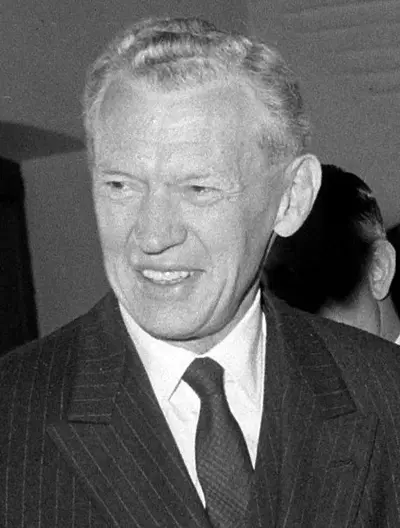
Jacques-Maurice Couve de Murville was a French diplomat and politician who was Minister of Foreign Affairs from 1958 to 1968 and Prime Minister from 1968 to 1969 under the presidency of General de Gaulle. As foreign minister He played the leading role in the critical Franco-German treaty of cooperation in 1963, He laid the foundation for the Paris-Bonn axis that was central in building a united Europe.
