Ibrahim Babangida Quotes
Our choice of a reform framework dictated that we looked at the fundamental assumptions that had driven Nigeria's economy, society and policy hitherto and to seek ways of either abandoning or transcending those assumptions and their supporting institutions.
Babangida, Ibrahim. "Declaration of Interest for the 2011 Presidential Election." 13 Apr. 2010, Abuja. Address.


The dramatic thing about this quotation is that in public, the mantra of conservatives about the courts of America is that they make and change laws as opposed to just interpreting and clarifying the laws. They traditionally accuse judges who rule against their favorite positions as using the courts as an instrument of political and social change. Here a leading conservative federal jurist, who thereafter became a member of the Supreme Court, was acknowledging and advocating the courts as instruments for conservative social, economic, and political change.

It was finally passed and signed into law on August 22, 1996

The General’s public outburst over Truman’s Executive Order was emblematic of the military’s initial discontent with racial integration. Bradley subsequently apologized for his remarks.


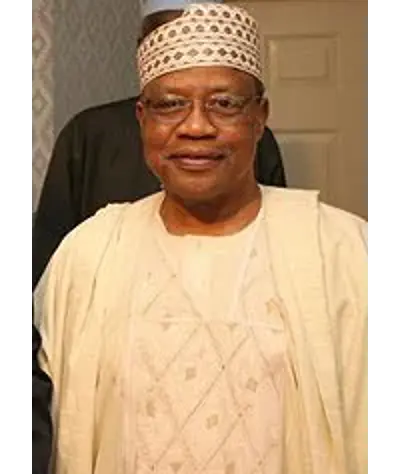
Ibrahim Badamasi Babangida GCFR popularly known as IBB; nicknamed, "Maradona" or "The Evil Genius", is a retired Nigerian Army general who ruled the Federal Republic of Nigeria from 27 August 1985 until his resignation in August 1993. He served as Chairman of the Armed Forces Ruling Council from 1985 to 1993 and Chief of Army Staff from 1984 to 1985; going on to orchestrate his seizure of power in a palace coup d'ètat against Muhammadu Buhari. He rose through the ranks of the Nigerian Army fighting in the Nigerian Civil War and at various times being involved in all the military coups in Nigeria, before advancing to the full-rank of a General and ultimately as Commander-in-Chief of the Armed Forces; and as an unelected President and military strongman from 1985 to 1993, ruling for an uninterrupted period of eight years. His years in power, colloquially known as the Babangida Era, are considered one of the most controversial in the military history of the country, and characterized by a burgeoning political culture of corruption in Nigeria, with Babangida and his regime estimated at least 12 billion dollars (23.9 billion today).
