Plutarch Quotes
Ought a man to be confident that he deserves his good fortune, and think much of himself when he has overcome a nation, or city, or empire; or does fortune give this as an example to the victor also of the uncertainty of human affairs, which never continue in one stay? For what time can there be for us mortals to feel confident, when our victories over others especially compel us to dread fortune, and while we are exulting, the reflection that the fatal day comes now to one, now to another, in regular succession, dashes our joy.
Plutarch. Plutarch's Lives. Translated by John Dryden, revised by Arthur Hugh Clough, vol. 2, Little, Brown, and Company, 1859, p. 182.


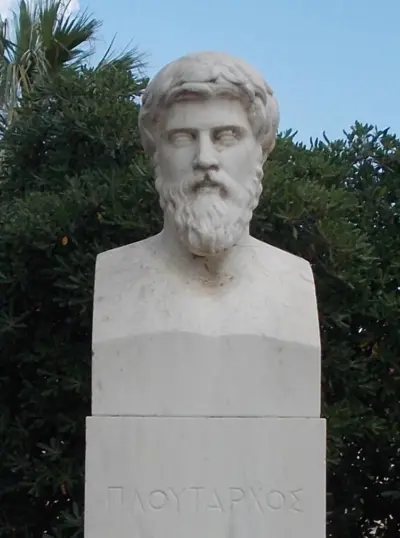
Plutarch (/ˈpluːtɑːrk/; Greek: Πλούταρχος, Ploútarchos; Koine Greek: [ˈplutarkʰos]; AD 46–after AD 119) was a Greek Middle Platonist philosopher, historian, biographer, essayist, and priest at the Temple of Apollo. He is known primarily for his Parallel Lives, a series of biographies of illustrious Greeks and Romans, and Moralia, a collection of essays and speeches. Upon becoming a Roman citizen, he was named Lucius Mestrius Plutarchus (Λούκιος Μέστριος Πλούταρχος).
