Dean Acheson Quotes
Only slowly did it dawn on us that the whole world structure and order that we had inherited was gone.
Referring to the years of Harry S Truman's Presidency, 1945-1953:
Dean Acheson, 1893-1971, U.S. Secretary of State (Democrat), Present at the Creation
Sourced by: Eigen's Political and Historical Quotations


This incredibly accurate prediction was made before the United States had entered the War when Japan attacked Pearl Harbor. Nehru had been educated in England and lived there at various times where he was one of the intelligence. He virulently detested Fascism and made very careful distinctions between the level of morality of British Colonialism and the much greater evil of Hitler-Mussolini Fascism. Few anti-colonial leaders then and since were able to see the shades of grey and make such a nuanced analysis. He foresaw that devastation caused by Fascist aggression and the world reaction would be so profound that the entire world order would change radically. Few others realized that at this time.

Walters who had been a brilliant military intelligence officer—and is in the Intelligence Hall of Fame—saw the fall of the Berlin Wall coming and had made some preparations. However, no one else in the government paid any attention to his prediction because the CIA and the NSA as well as the DOD Service Military Intelligence units all had nothing suggesting such a possibility in all their reports. They were all relying on spies. But the East Germans and the Russians had no idea that the fall of the Berlin Wall was a possibility, and their assessments said that it was not possible. Our spies reported that and out intelligence agencies assumed that they knew what they were talking about. Walters, however, based his judgment on reading very thoroughly all the publicly available information, and visited the American Zone of Berlin and inspected the Wall, its culture, the reports from the East Germans who had managed to escape, and it was very clear to him.


“Ancien regime” is a French political term for the regime that was in power before the revolution.

The seeds of revolution were sprouting. That year there were over 2400 strikes in Czarist Russia where a strike was unheard of just a few years before. Four years after this prediction, Russia erupted in revolution and bloody civil war. The standard of living for all Russians would crash and not recover for decades.


He was not attributing this to any particular polices or the United States. The U. S. had the so large and was such a force on so many areas that most things the U. S. did would potentially affect every oither nation in the world. There was almost no situation in the world in which the U, S, position and extent of invlovement would not affect the countires involved. At the same time the rapidly accelerating technological change that is changine everything is being led by United States scientists, technologists, and corporations. So if technological change was destabilizing which it was in most societies including America's the United States was the driver. And then, the Presidential election victory of Donald Trump, who had a a stated practice being inconsistant on many things, of aggressivly looking for new ways of doing things in American politics (and had been an exemplar during the campaign), and a strong reluctance to have broad general policies that woild guide his policies and intentions. American politics was changing more than usual with both major political parties were going through major reinvntions and struggles to define themselves. The United States was, moreso than any other country, culturally used to rapid change througout the society and still thriving. But for most other cultures, these things all together could determine the perception of stability and the lac k thereof in most of the world. But even the methods of dealing with climate change which is a source of anxiety for most nations, realsitically depends on what the United States will do or not do and that lack of certainty or even liklihood to prediuct affects people the world over.

_0_PostageStamp_47x47.jpg "Chairman of the Joint Chiefs of Staff Navy Adm. Mike Mullen gives an interview to John Dickerson during the CBS news program Face the Nation in Washington, D.C., July 5, 2009. During the interview, Mullen discussed the wars in Iraq and Afghanistan, North Korea's recent missile tests and his recent visit to Russia. (DoD photo by Mass Communication Specialist 1st Class Chad J. McNeeley, U.S. Navy/Released)")


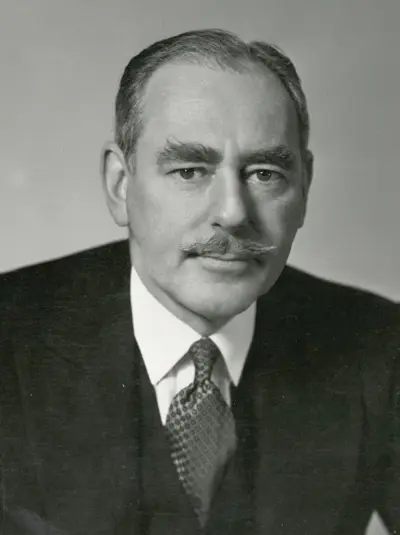
Dean Gooderham Acheson was an American statesman and lawyer. As United States Secretary of State in the administration of President Harry S. Truman from 1949 to 1953, he played a central role in defining American foreign policy during the Cold War. Acheson helped design the Marshall Plan and was a key player in the development of the Truman Doctrine and creation of the North Atlantic Treaty Organization.
