Clive Bell Quotes
Only reason can convince us of those three fundamental truths without a recognition of which there can be no effective liberty: that what we believe is not necessarily good; and that all questions are open.
Clive Bell, 1881-1964, British art critic, Civilization
Sourced by: Eigen's Political and Historical Quotations


Islamic modernists like Serageldin are many among the educated Muslims but their views are often drowned out by the violence and extremist statements of the fundamentalists.


Islamic modernists like Serageldin are many among the educated Muslims but their views are often drowned out by the violence and extremist statements of the fundamentalists. Ironically, the necessary intellectual freedom existed in the Islamic world one thousand years ago and Islamic science and other learning was as advanced as any and superior to most including the Christians.

1st Earl of Beaconsfield


Note the language used to describe the American government at the time. To the founders, it was an EXPERIMENT. Nothing like that had ever been tried before. And none of them were sure it would work. After defeating the British, they could have chosen for their new independent nation any one of dozens of well-established forms of government. But these were all flawed. So they risked the new nation on a form that had little or no precedent and might or might not survive. Centuries later many national leaders and legislators were fearful to try anything that they were not highly certain would be effective. Experiments were rare until there were crises so great that none of the orthodox solutions would be sufficient, and even then the innovators were criticized such as with Lincoln and Franklin Delano Roosevelt. They were candid enough to admit that they were experimenting. FDR in particular announced experimentation as a policy with rapid change for the experiments that did not work out of which there were several.
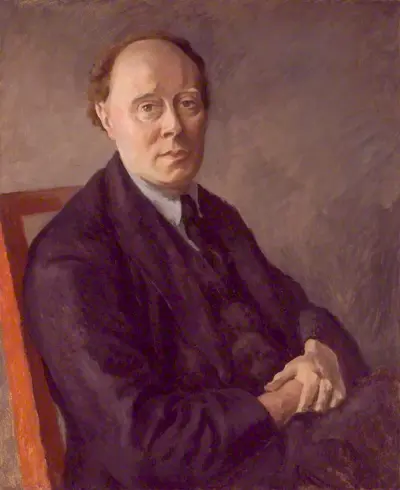
Arthur Clive Heward Bell was an English art critic, associated with formalism and the Bloomsbury Group. He developed the art theory known as significant form.
