Henry A. Kissinger Quotes
One thing I don't want around me is a military intellectual. I don't have to worry about you on that score.
Isaacson, Walter. Kissinger: A Biography. Simon & Schuster, 1992, p. 207.


Generally, the American military is much more optimistic of its ability to accomplish its objectives as that it the way they have been trained. The General warns that the same attitude will make them more optimistic and willing to tackle a very difficult if not impossible problem than most would be. So civilians in America have to question what they are doing. At the same time, there have been a number of highly sophisticated military officers who have both a military and civilian perspective and education. They tend to be more realistic and at times argue against military deployments and missions that are being considered. However, once deployed and committed, it is culturally difficult or impossible for a member of the military to be pessimistic about the eventual


The Emperor was writing to his son to explain the defeat of Japan. In what was a bit of revisionist history, the Emperor neglected to mention that with the exception of some of the incursions in China, Hirohito had personally approved every Japanese invasion including Pearl Harbor. Further, it was he who had approved the orders that Japanese troops should fight to the death rather than retreat or surrender.

Commenting on military weapons procurement:


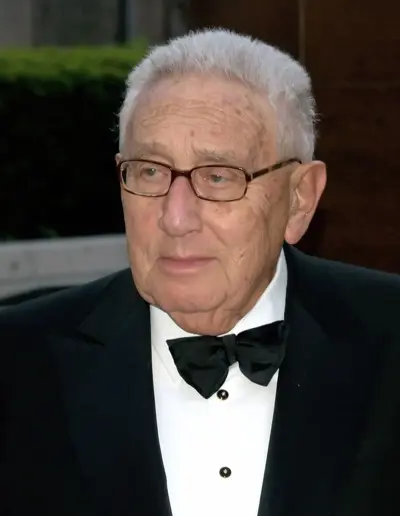
Henry Alfred Kissinger KCMG is an American politician, diplomat, and geopolitical consultant who served as United States Secretary of State and National Security Advisor under the presidential administrations of Richard Nixon and Gerald Ford. A Jewish refugee who fled Nazi Germany with his family in 1938, he became National Security Advisor in 1969 and U.S. Secretary of State in 1973. For his actions negotiating a ceasefire in Vietnam, Kissinger received the 1973 Nobel Peace Prize under controversial circumstances, with two members of the committee resigning in protest.
