Bergen Evans Quotes
One of our most solemn obligations is to state the truth as we see it and to refuse to allow any of our courses to become instruments of propaganda. The world has seen the dreadful consequences of Aryan History instead of history, and of Communist Genetics instead of genetics. Courses whose primary purposes are political or racial indoctrination have no place in our educational system—no matter who demands them or what noble purposes they seem to serve.
Bergen Evans, 1904-1978, English Professor, Commencement Address, Northwestern University, June 14, 1968
Sourced by: Eigen's Political and Historical Quotations


Santorum’s view was not quite as absurd as this quotation would indicate. His concern was that he believed that colleges and universities were dominated by left wing, liberal faculty, who indoctrinate the students and turn them into Democrats or liberal Republicans. This he thought was bad for the country. The view is not complete paranoia. Higher Education is rarely indoctrination in America. Virtually every school has some politically conservative faculty as well as faculty who are in the political left and some are apolitical. However most of the good schools are liberal in the traditional meaning of the word and as it has been used in Europe and initially in the United States. This liberal tradition is characterized by openness to all ideas and points of view including those that the government or other institutions of society are sometimes uncomfortable with. This intellectual tolerance makes some ultraconservatives uncomfortable. However, other political conservatives are very “liberal” in the intellectual sense including most of the great conservative writers and philosophers and economists of the last centuries. There are people of all political and religious persuasions in most societies who are concerned that the ideas young people might be exposed to are harmful to them and detrimental to society. Most have more faith in young people and see the major role of education is to expose the student to new and different ideas for the student to consider. Santorum is one of the former; all his Republican opponents were of the other point of view.


The textbooks in the Egyptian schools and universities would change frequently as the politics of the nation and the world changed. This is typical in nations where ideology changes frequently. There is pressure for textbook change even in America, even over such basic science as evolution or interpretations of history and politics. In Egypt and most other nations even facts change from year to year.


The University of Wisconsin had a radical faculty member who claimed that the 9-11 attack was the fault of Vice President Cheney and other absurd claims that were supportive of the Muslim Terrorists. Many called for the firing of the faculty member who had academic tenure. The University decided that college students were not going to be fooled or seduced by such absurd statements and that while in this case the statement were controversial and absurd, what would happen when a faculty statement was just controversial. The University agreed with almost all of the other great universities in America with the fact that the risk of a foolish pedant like this is very tiny in contrast to the risk of allowing officials—-academic or political---to to determine what a professor can say. This freedom has made the American University system the envy of the entire world.

From the earliest European universities, the conservative elements of the society has always felt that the universities were hotbeds of liberalism. Generally, the more education anyone obtains, the less he/she is susceptible to doctrine and control by others. However, far from liberal indoctrination, the leading conservative—including those like Santorum who castigate the universities, are themselves the products of the so called “indoctrination”. Generally, conservatives have tended to use the instruments of government and the access to wealth to control and shape the range of the political dialogue. In most societies, the University is a place where there is a much broader range of points of view available. In many nations today, the universities are censored, suspected, controlled by the establishment of the society to avoid rapid change which by definition, conservatives oppose.

While this quotation seems bizarre to us in modern America, there was some historical truth of this in Europe. Before political parties, the Church was the dominant political force, and no professor could be appointed whose views did not coincide with those of the church. Later political parties in many parts of Europe did concern themselves with the views of professors. However, America with its strong tradition of private universities built state public universities in the mold of Harvard, Yale, Brown, Columbia and Princeton where national and local politics were not major factors of appointment and retention of professors. Today it is very rare when a state legislature or government allows politics to become a factor in appointments of professors. The University of Virginia is the most dramatic exception where governors of the state serve for 2 years and when a new governor takes office, he replaces all the trustees and the University. These then have allowed politics to become a major factor in some dramatic cases. And the Federal Universities—the military service academies—do allow political views to encroach on the faculty appointment and retention decisions. However, this is rarely partisan in the sense of Democrat or Republican. But Professors who hold views contrary to BOTH political parties are rare.


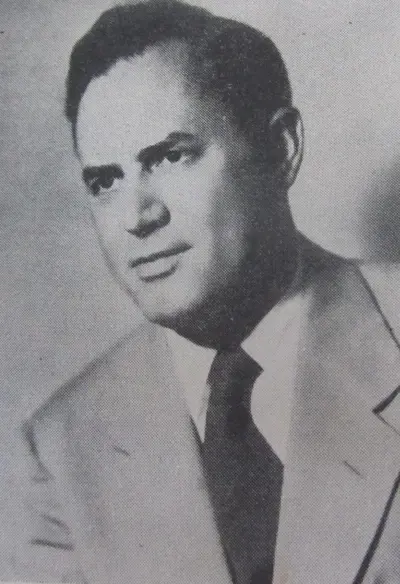
Bergen Baldwin Evans was a Northwestern University professor of English and a television host. He received a George Foster Peabody Award in 1957 for excellence in broadcasting for his CBS TV series The Last Word.
