A. P. J. Abdul Kalam Quotes
One lesson that every nation can learn from China is to focus more on creating village-level enterprises, quality health services and educational facilities.
Kalam, A. P. J. Abdul, and Srijan Pal Singh. Target 3 Billion: PURA: Innovative Solutions Towards Sustainable Development. Penguin Books, 2011, p. 115.


Devolution is the decentralization of government. Wales and Scotland were originally countries different from England. They came under the control of a single king but recently have obtained more autonomy—not unlike states in the United States. This reform was opposed by some politicians.

Spanish Colonial Policy and Practice was generally terrible and particularly so in the Philippines, See {629450}. So it was relatively easy for the President to document genuine improvements our imperialism had produced. However, the Filipinos would have preferred to make progress as an independent country.


He did adopt a program of extensive building of apartments, schools, hospitals and other infrastructure. But the nation was in a virtual dictatorship of him and his wife with little regard for human rights. The rapid steding on construction was then followed by his program of austerity in which food became so scarce that malnutrition was common and many were at the verge of starvation to pay his programs. He and his wife were convicted at a show trial and executed immediately afterward.


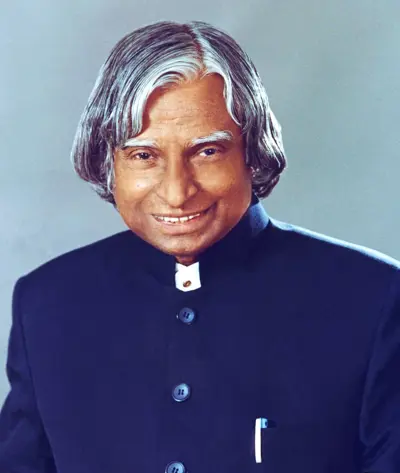
Avul Pakir Jainulabdeen Abdul Kalam was an Indian aerospace scientist and politician who served as the 11th President of India from 2002 to 2007. He was born and raised in Rameswaram, Tamil Nadu and studied physics and aerospace engineering. He spent the next four decades as a scientist and science administrator, mainly at the Defence Research and Development Organisation (DRDO) and Indian Space Research Organisation (ISRO) and was intimately involved in India's civilian space programme and military missile development efforts. He thus came to be known as the Missile Man of India for his work on the development of ballistic missile and launch vehicle technology. He also played a pivotal organisational, technical, and political role in India's Pokhran-II nuclear tests in 1998, the first since the original nuclear test by India in 1974.
