Scott Ritter Quotes
One, if you attack my integrity, I will defend myself. If you attack my patriotism, I will defend myself. If you come after my family, I will counter-attack viciously, I will destroy you.
Ritter, Scott. Interview by Matt Lauer. Today, NBC, 15 Jan. 2003.

He was a fierce defender of New York City.

He was criticizing the George W. Bush administration for attacking Iraq, a country which had not attacked the United States or Americans abroad while America did not attack those terrorists and countries which had killed Americans. For example, Hezbollah which blew up the Marine Barracks in Lebanon and the naval ship Cole.


The nation was in the midst of a major steel strike and the President felt that the steel companies had reneged on their promises:

Right wing conservatives were not always in favor of large defense expenditures. Prior to WWII most were opposed to defense spending and they were the pacifists. Clark was one of the few that maintained this view after WWII.

This passage from Mormon scripture justifies self defense and certain righteous war. It is also used by some Christians to argue that Mormons are not Christians because they do not accept Christ’s directive to “turn the other cheek”.

It is not known whether Agamemnon ever existed other than in Greek legends. The “quotation” comes to us from Homer’s Iliad which itself was based on oral histories before and itself was oral for years before it was written. So the dialogue may be written by Homer. However, if real, was the earliest reference to genocide. The photograph is of a mask believed to be of the period but there is no certainty is was the King even though was associated with him by Heinrich Schliemann—the 19th century archeologist who found the object.


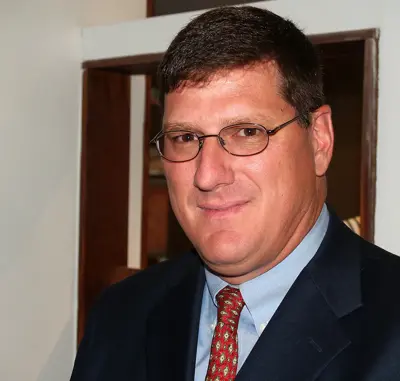
William Scott Ritter Jr. is a former United Nations weapons inspector in Iraq from 1991 to 1998. He later became a critic of United States foreign policy in the Middle East. Prior to the invasion of Iraq in March 2003, Ritter stated that Iraq possessed no significant weapons of mass destruction (WMD) capabilities, becoming according to The New York Times "the loudest and most credible skeptic of the Bush administration’s contention that Hussein was hiding weapons of mass destruction."
