Plautus Quotes
One eye-witness is of more weight than ten hearsays. Those who hear, speak of shat they have heard; whose who see, know beyond mistake.
[Lat., Pluris est oculatus testis unus, quam auriti decem.
Qui audiunt, audita dicunt; qui vident, plane sciunt.]
Plautus, Titus Maccius. The Comedies of Plautus. Translated by Henry Thomas Riley, vol. 2, H. G. Bohn, 1852, p. 222.


This was a time when the church and establishment only recognized the Bible and the views of the authorities as a means of knowing and validating knowledge. By appealing to the individual’s own judgment and empiricism he was far ahead of his time. See {586126}.


He had just returned from Darfur in which there was a genocide and ethnic cleansing in progress with the Arabs murdering the Africans in the province with the condonation and assistance of the Sudanese government.


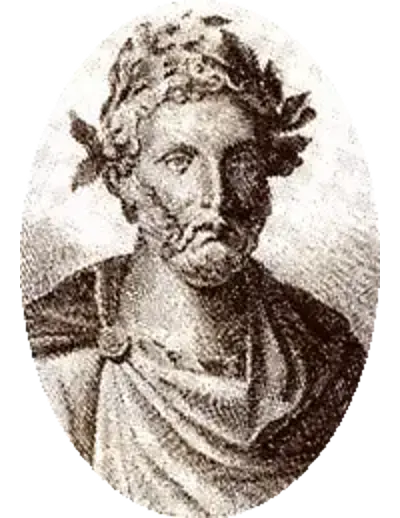
Titus Maccius Plautus (/ˈplɔːtəs/; c. 254 – 184 BC), commonly known as Plautus, was a Roman playwright of the Old Latin period. His comedies are the earliest Latin literary works to have survived in their entirety. He wrote Palliata comoedia, the genre devised by the innovator of Latin literature, Livius Andronicus. The word Plautine /ˈplɔːtaɪn/ refers to both Plautus's own works and works similar to or influenced by his.
