James Forman Jr. Quotes
One consequence of racism and segregation is that many American whites know little or nothing about the daily lives of African Americans. Black America's least-understood communities are those poor, hyper-segregated places we once called ghettos. These neighborhoods are not far away, but they might as well be on the moon.
Forman, James, Jr. Locking Up Our Own: Crime and Punishment in Black America. Farrar, Straus and Giroux, 2017.


The phrase “submerged tenth” was ironically used earlier {595222} by a great humanitarian, William Booth, 1829-1912, British Cleric & Founder of The Salvation Army to refer to the poor and the underclass of England. The Salvation Army focused on helping the submerged tenth; the Eugenics Record Office, sterilizing them. The Eugenics Record Office was an activist organization advocating the forced sterilization of those people who they deemed to be inferior from a hereditary point of view. Most Americans are today shocked to find that this organization and its ideas were so influential that more than 30 states had passed similar laws. Only California and Virginia were very zealous in carrying them out however. By 1935, 20,000 forced sterilizations had been carried out in the United States. The Supreme Court at the time even found such laws Constitutional. See {603680}.

“FHA” was the Federal Housing Administration. This federal agency de facto controlled the vast majority of the mortgage loans in America. The agency, under the control of racists, redlined black neighborhoods from obtaining mortgages and even worse discouraged mortgage loans even in affluent white areas if it was an affluent Negro family that wanted to buy a house there. {637259} and {637260} are quotations which are examples of FHA racist policies.


On the day of the March on Washington the Congress of Racial Equality asked Levitt if he would change his policies on discrimination against Negroes. This quotation, perhaps more than any, other illustrates why legal discrimination was so pernicious. Any builder who tried to break down the housing color barrier would pay an economic penalty and the moral issue became economic. In trying to change America’s attitude on race the people who is the way would then be punished economically. This is why both the black-and-white leadership who wanted desegregation realized that it had to be done by legislation, and not by a process of education and persuasion. In housing a persuaded convert could not act alone without severe penalty. Even after housing discrimination was made illegal, the builders who desegregated suffered somewhat for many years because so many people found ways to evade the law, and government officials at all levels were reluctant to enforce the law.


Poverty affect many more females than males. The individual decisions or lack thereof that can cause poverty in a family are much more frequently made by men with females having little or no say in many cultures. The politicians and powerful people who control many societies and could make the system changes needed to reduce poverty are mostly men.


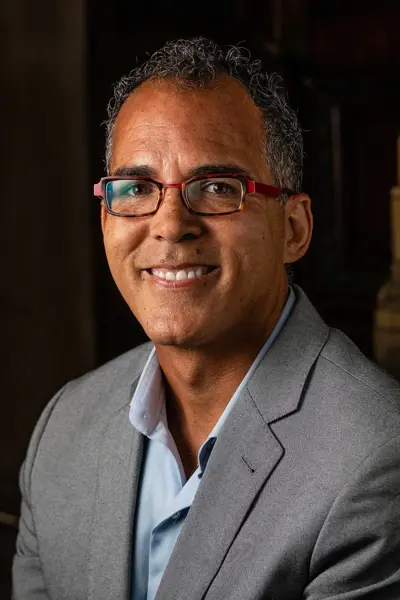
James Forman Jr. is an American legal scholar currently serving as the Professor of Law at Yale Law School. He is the author of Locking Up Our Own: Crime and Punishment in Black America, which won the 2018 Pulitzer Prize for General Nonfiction, and a co-founder of the Maya Angelou School in Washington, D.C.
