Barbara Ehrenreich Quotes
Once you do lose a job, there are not a lot of social supports for you. You lose health insurance because we have this absurd system in America where health insurance is usually tied to employment. Your income dips. And that's when you get into selling the house.
Ehrenreich, Barbara. Interview by David Brancaccio. NOW, PBS, 14 Oct. 2005.


The debate in America around jobs during the Great Recession in 2012 may have seemed like a new issue for many Americans. The government wanted to economize, but there was a very high unemployment. Should the government spend money to employ more people or cut back on government jobs. The same issue faced the British in 1848. Most of the politicians and the Parliament wanted to reduce government spending. The Prince (husband of Queen Victoria) and the Queen observed that the economy solution would fall more heavily on the working class. At this time, the British monarchy was far more liberal than most of the politicians.


One of the arguments in favor of machinery and automation has always been that new and better jobs are created for the people who run and maintain the machines. However as Marx observed in 1867 that is of no comfort to the person who is replaced by the machine. Also with the computer and modern robots, the control and operation is often done by another computer. Even much of the computer programming is done by computer.


Actually during this period, automation and other forms of technological unemployment have been far more responsible for the loss of good jobs in America than offshoring which has been far more responsible than competition from immigrants.


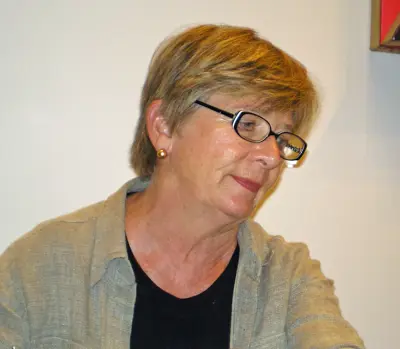
Barbara Ehrenreich is an American author and political activist who describes herself as "a myth buster by trade" and has been called "a veteran muckraker" by The New Yorker. During the 1980s and early 1990s she was a prominent figure in the Democratic Socialists of America. She is a widely read and award-winning columnist and essayist, and author of 21 books. Ehrenreich is perhaps best known for her 2001 book Nickel and Dimed: On (Not) Getting By in America. A memoir of Ehrenreich's three-month experiment surviving on minimum wage as a waitress, hotel maid, house cleaner, nursing-home aide, and Wal-Mart clerk, it was described by Newsweek magazine as "jarring" and "full of riveting grit," and by The New Yorker as an "exposé" putting "human flesh on the bones of such abstractions as 'living wage' and 'affordable housing'." She is a recipient of a Lannan Literary Award.
