Theodore Hesburgh Quotes
Once He created the Big Bang... He could have envisioned it going in billions of directions as it evolved, including billions of life-forms and billions of kinds of intelligent beings. As a theologian, I would say that the proposed search for extraterrestrial intelligence (SETI) is also a search of knowing and understanding God through his works - especially those works that most reflect Him. Finding others than ourselves would mean knowing Him better.
Hesburgh, Theodore M. "Foreword." The Search for Extraterrestrial Intelligence: SETI, edited by Philip Morrison, John Billingham, and John Wolfe, NASA SP-419, National Aeronautics and Space Administration, 1977, p. viii.


Diversarum Hereseon Liber. This compendium of heresies would be funny but for the fact that people lived and died according to their “acceptance” of some of these absurdities.

This quotation is noteworthy because although there are some scientists who are sympathetic to the religious fundamentalist view of the origin of the universe, they are almost always second class scientists. In this case, the scientist is a first class scientist, a Nobel Prize winner in Chemistry. So his quotation has more weight than of most others and is used more often by many fundamentalists who support the Biblical Genesis version of creation rather than the Big Bang scientific explanations and evolution. There are however many great scientists who also are people of faith in a God. They may be religious, but like most religious Americans, interpret the Bible metaphorically and symbolically rather than literally as the fundamentalists do.


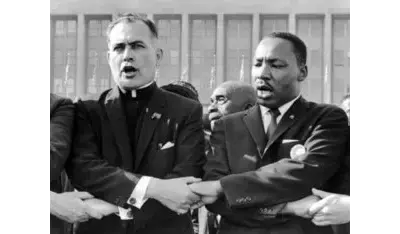
Rev. Theodore Martin Hesburgh, CSC was a native of Syracuse, New York, who became an ordained priest of the Congregation of Holy Cross and is best known for his service as the president of the University of Notre Dame for thirty-five years (1952–1987). In addition to his career as an educator and author, Hesburgh was a public servant and social activist involved in numerous American civic and governmental initiatives, commissions, international humanitarian projects, and papal assignments. Hesburgh received numerous honors and awards for his service, most notably the United States's Presidential Medal of Freedom (1964) and Congressional Gold Medal (2000). As of 2013, he also held the world's record for the individual with most honorary degrees with more than 150.
