Adolf Hitler Quotes
Once again the songs of the fatherland roared to the heavens along the endless marching columns, and for the last time the Lord's grace smiled on His ungrateful children.
Hitler, Adolf. Mein Kampf. Translated by Ralph Manheim, Houghton Mifflin, 1943, p. 163.


The Ottoman Turks had conquered much of Europe, as far even as Vienna. Ataturk although an incredible reformer for democracy, religious freedom, and gender equality, felt that critical to Turkey’s independence and ability of engage in radical reform depended on the World and European and Turkish perception that Turkey was the equal of any European nation and had ruled most at one point.


The concept of race then was not what it is today where it is, if anything, a genetic or anthropological distinction. Then race was a combination of blood (genetics) and culture. Wittgenstein, an Austrian by nationality, considered himself German racially. This concept of race was common in 1914 and rose to be absolute in the Nazi era. So the absorption of Austria by Germany did not seem to most Austrians a diminution of anything but a natural recognition of the unity of one people—the German race. Wittgenstein was not alone among intellectual “Germans” who believed the English “race” superior. Their ability to operate a democracy without a powerful leader was considered a great strength as was the diffusion of power and control were both admirable accomplishments which some German intellectuals envied.


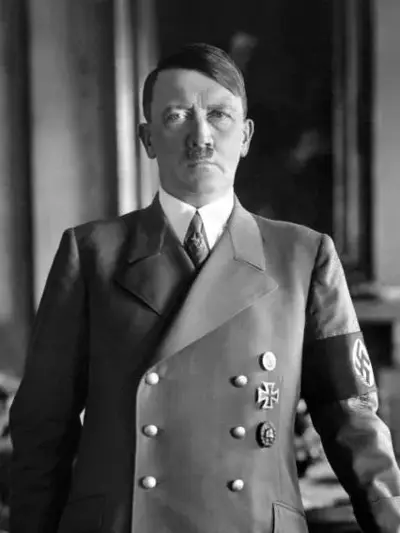
Adolf Hitler was an Austrian-born German politician who was the dictator of Germany from 1933 to 1945. He rose to power as the leader of the Nazi Party, becoming Chancellor in 1933 and then assuming the title of Führer und Reichskanzler in 1934. During his dictatorship from 1933 to 1945, he initiated World War II in Europe by invading Poland on 1 September 1939. He was closely involved in military operations throughout the war and was central to the perpetration of the Holocaust, the genocide of about 6 million Jews and millions of other victims.
