George Bernard Shaw Quotes
Of all the anti-social vested interests the worst is the vested interest in ill-health.
Shaw, George Bernard. The Doctor's Dilemma, Getting Married, & The Shewing-Up of Blanco Posnet. Constable and Company, 1911, p. xvii.


The CDC scientists track communicable diseases and are responsible for creating vaccines each year in time to limit the “flu season’ and other disease mortality and morbidity. In the government shutdown, they could not even volunteer to work in their own laboratories.

Sachs was commenting on the tendency of some to blame all the problems of Africa on corruption and bad governance.


This is a very interesting historical quotation. The House and the Senate closed the galleries because America was in the midst of the most fatal outbreak of disease in its history. It was the Flu, but that year it was a particularly virulent strain—the first time the world had seen the H1N1 strain. There was no vaccine then and about 100 million people died worldwide. In America more than ½ million people died. It was the worst Pandemic in history—it killed more people than the Black Plague even. The medical authorities did realize that the flu was spread from person to person but other than keep people from congregating in groups as in the Congressional galleries, there was little they knew about what to do.

Botswana is one of the few African national successes at that time. It is the world’s largest diamond exporter and unlike many other nations, wealthy in natural resources like Saudi Arabia or Iran, Botswana became a multi-party democracy upon independence and has remained that ever since.


The first Jew to run for the Vice Presidency on a major party ticket.


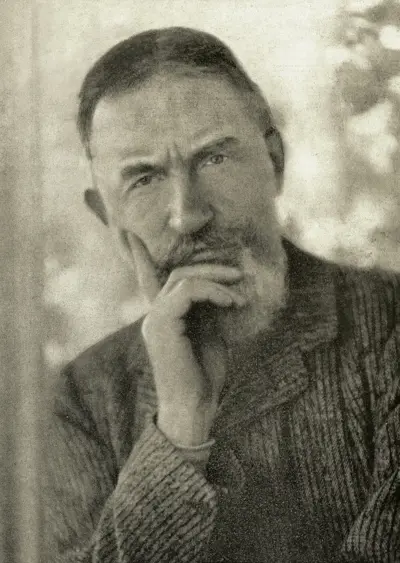
George Bernard Shaw, known at his insistence simply as Bernard Shaw, was an Irish playwright, critic, polemicist and political activist. His influence on Western theatre, culture and politics extended from the 1880s to his death and beyond. He wrote more than sixty plays, including major works such as Man and Superman (1902), Pygmalion (1912) and Saint Joan (1923). With a range incorporating both contemporary satire and historical allegory, Shaw became the leading dramatist of his generation, and in 1925 was awarded the Nobel Prize in Literature.
