Mary McGrory Quotes
Nothing so marks Republicans as their genius for organizing, and their take-no-prisoners approach to problems that Democrats leave to chance.
Mary McGrory, 1918-2004, Political Columnist, "A Lesson in Spin," The Washington Post, February 16, 1995
Sourced by: Eigen's Political and Historical Quotations


The Evangelicals and other social conservatives had much more influence over the Republican candidate since without the social conservatives voting in large numbers for the Republican Presidential candidate, at the time, it would be hard to win the general election, but Democrats had won without them. However, at the time, the social conservatives had a virtual veto over the Republican candidate selection.

The stranglehold that the Southern Democrats had held on civil rights legislation had been broken in 1968 by Lyndon Johnson and the other Democrats with key support from some liberal Republicans like Lindsay. However, the South felt politically betrayed. The Republican leadership, in what was one of the most brilliant political strategies in American history, played to the disaffected racist Southerners and welcomed into their party. Within the next 30 years virtually the entire South had gone Republican, and the Republican captured both houses of Congress and the Presidency with the South solidly Republican. At the time, Lindsay and some Republican leaders criticized bitterly about the party pandering to the worst racist elements of the nation. The “Party of Lincoln” had become the party of the segregationists, the racists, the hate groups of the country.

He had invited Ted Kennedy to also give a presentation at the library, and this was part of the introduction. The President rarely “jumped” on anyone, but he was referring to the common practice of his fellow Republicans of using Kennedy as the villain in fundraising and partisan attacks.

Actually, it was the Tea Party members of the Republican Party whose unprecedented willingness to risk the full faith and credit of the United States when the majority of the Republican legislators and almost all the Democrats were not, who held the required Debt Ceiling Increase hostage to getting their legislative way. But in this particular debate and legislation the Democrats gained nothing except that the anger of the American People was much greater against the Republicans than the Democrats, many of whose usual supporters thought that the Democrats had been totally intimidated by the Tea Party.

In 2012, the Republicans were a very narrow party; almost all Republicans were quite conservative. In contrast, the Democrats had conservatives, liberals and socialists at the same time. When the Democrats accomplished something, if they talked much about it, the conflicts within the party would be ripped open and there would be democrats attacking the democratic accomplishments along with the Republicans. Historically, it was not always such. In the 1940s for example, it was the reverse where the Republicans were generally more quiet about their accomplishments than the Democrats who were divided only on race relations and civil rights and unified on most else.

Over time, this has been a good description of the difference between the Democratic and Republican parties.


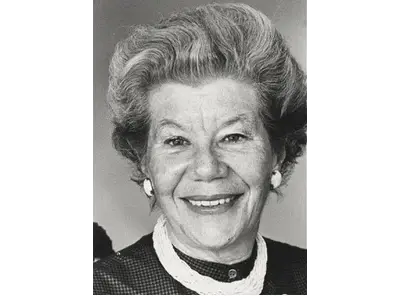
Mary McGrory was an American journalist and columnist. She specialized in American politics, and was noted for her detailed coverage of political maneuverings. She wrote over 8,000 columns, but no books, and made very few media or lecture appearances. She was a fierce opponent of the Vietnam War and was on Richard Nixon's enemies list. One reviewer said:
