Khmer Rouge Quotes
Nothing harmful to the nation, the revolution, or the party must be thought of or created.
Cambodian Khmer Rouge Slogan, 1970s
Sourced by: Eigen's Political and Historical Quotations


Commenting on political parties in Cuba:

This was one of the first of the world communist leaders who had concluded that the Russian communist state and its revolution had failed. Russia of 1923 was perceived as too dictatorial and not democratic enough. At the same time they thought Russia had not only sold out the democratic nature of communism but also the economic as well by having too much private property and making economic deals with Western capitalists giving concessions of all kinds to Krupp and other major Multinational companies to try and develop international trade and investment. Politically the communist critics thought Russian communism too left wing and undemocratic and economically too right wing and capitalistic.

See {604839} and {606444} as examples that O’Brien argues prove his point. However, Pol Pot’s killings were not to revolt. He had already achieved power, and the murders were a combination of vengeance and an attempt not to change government but to alter culture and values be exterminating those whose cultural perspective was different from the regime IN POWER.

The word “smashing” is a literal translation from the Khmer language. It is not used in the metaphorical sense as we are used to. To save money, arms, bullets and resources the Khmer Rouge method of execution was to “smash” the victim’s head in with a shovel or other implement. This slogan told people literally to murder their political enemies in this brutal way.


This is a very noteworthy quotation. The reason is that in America, the extreme right wing accuses liberals of being communists or supporters of communism. However, here one of the two major Communists in the world, condemns liberalism and states that liberals are the enemy of communism.


Hayek uses this line to explain that fascism may emerge when communism—or belief in its promise—fails, as seen in Stalinist Russia and pre‑Hitler Germany.


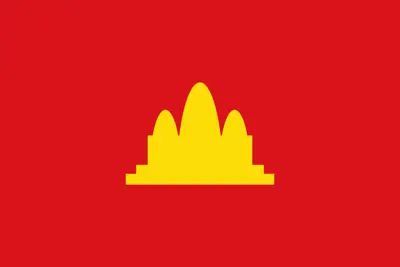
The Khmer Rouge (/kəˌmɛər ˈruːʒ/, French: [kmɛʁ ʁuʒ]; Khmer: ខ្មែរក្រហម, Khmêkrâhâm [kʰmae krɑˈhɑːm]; "Red Khmers") is the name that was popularly given to members of the Communist Party of Kampuchea (CPK) and by extension to the regime through which the CPK ruled Cambodia between 1975 and 1979. The name was coined in the 1960s by Norodom Sihanouk to describe his country's heterogeneous, communist-led dissidents, with whom he allied after his 1970 overthrow.
