Josiah Strong Quotes
Not only does the proportion of the poor increase with the growth of the city, but their condition becomes more wretched.
Strong, Josiah. Our Country: Its Possible Future and Its Present Crisis. The Baker and Taylor Co., 1885, p. 132.


The phrase “submerged tenth” was ironically used earlier {595222} by a great humanitarian, William Booth, 1829-1912, British Cleric & Founder of The Salvation Army to refer to the poor and the underclass of England. The Salvation Army focused on helping the submerged tenth; the Eugenics Record Office, sterilizing them. The Eugenics Record Office was an activist organization advocating the forced sterilization of those people who they deemed to be inferior from a hereditary point of view. Most Americans are today shocked to find that this organization and its ideas were so influential that more than 30 states had passed similar laws. Only California and Virginia were very zealous in carrying them out however. By 1935, 20,000 forced sterilizations had been carried out in the United States. The Supreme Court at the time even found such laws Constitutional. See {603680}.


Poverty affect many more females than males. The individual decisions or lack thereof that can cause poverty in a family are much more frequently made by men with females having little or no say in many cultures. The politicians and powerful people who control many societies and could make the system changes needed to reduce poverty are mostly men.

This appears to be the earliest use of the phrase “Poor White Trash” or even “White Trash”.
_0_thumbnail_47x47.jpg "William Gregg of South Carolina")
Gregg exclusively hired poor whites to work in his factory, hoping to elevate them into a more civilized—though still a menial—station, providing steady work and granting access to schools.


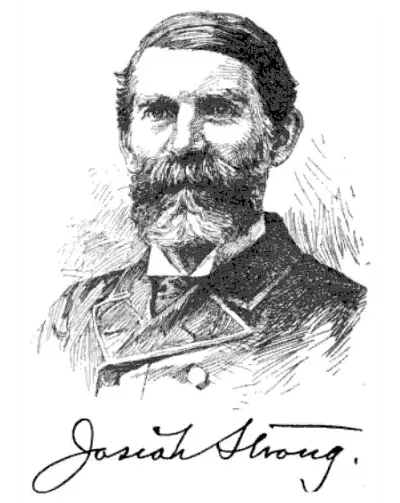
Josiah Strong was an American Protestant clergyman, organizer, editor and author. He was a leader of the Social Gospel movement, calling for social justice and combating social evils. He supported missionary work so that all races could be improved and uplifted and thereby brought to Christ. He is controversial, however, due to his beliefs about race and methods of converting people to Christianity. In his 1885 book Our Country, Strong argued that Anglo-Saxons are a superior race who must "Christianize and civilize" the "savage" races, which he argued would be good for the American economy and the "lesser races".
