Aristotle Quotes
Nor was civil society founded merely to preserve the lives of its members; but that they might live well: for otherwise a state might be composed of slaves, or the animal creation... nor is it an alliance mutually to defend each other from injuries, or for a commercial intercourse. But whosoever endeavors to establish wholesome laws in a state, attends to the virtues and vices of each individual who composes it; from whence it is evident, that the first care of him who would found a city, truly deserving that name, and not nominally so, must be to have his citizens virtuous.
Aristotle. A Treatise on Government. Translated by William Ellis, T. Payne, 1776, p. 119.


Anthony Ashley Cooper
This is one of the most interesting quotations of Medieval history. The king had equated morality and rule of law with popularity, and has placed a high priority on both—this at a time when most rulers believed that theirs was a divine right of rule. The great ones like Alexander the Great and Theodoric were exceptions. The letter was actually drafted and written by Cassiodorus, the King’s secretary.


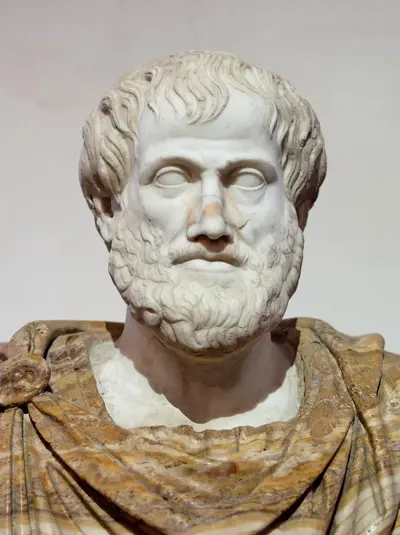
Aristotle (/ærɪˈstɒtəl/; Greek: Ἀριστοτέλης Aristotélēs, pronounced [aristotélɛːs]; 384–322 BC) was a Greek philosopher and polymath during the Classical period in Ancient Greece. Taught by Plato, he was the founder of the Lyceum, the Peripatetic school of philosophy, and the Aristotelian tradition. His writings cover many subjects including physics, biology, zoology, metaphysics, logic, ethics, aesthetics, poetry, theatre, music, rhetoric, psychology, linguistics, economics, politics, meteorology, geology and government. Aristotle provided a complex synthesis of the various philosophies existing prior to him. It was above all from his teachings that the West inherited its intellectual lexicon, as well as problems and methods of inquiry. As a result, his philosophy has exerted a unique influence on almost every form of knowledge in the West and it continues to be a subject of contemporary philosophical discussion.
