Homer Quotes
Nor can one word be chang'd but for a worse.
Homer. The Odyssey of Homer. Translated by Alexander Pope, Bernard Lintot, 1725.


Ataturk wanted to change the Turkish alphabet from Arabic to Latin characters. Experts estimated that it would take at least 15 years. Ataturk allowed no parallel usage, made it illegal for any documents or signs to be written in Arabic, and it was done in 3 months. The benefit was that Arabic took much longer to learn. Relatively few people could read or write. Arabic had been imposed on the Turkish language. Printing with movable type was much more difficult in Arabic and Atatuk wanted many more books published and read. Soon Turkey had the highest literacy rate in the Islamic world, and rivaled that of most Western nations. Making the sudden change not only had the advantage of fixating the entire society on the change, but did not allow opponents of the change (of which there were many) —especially the Islamic clergy many of whom felt that the Koran was the only book that people should be allowed to read.


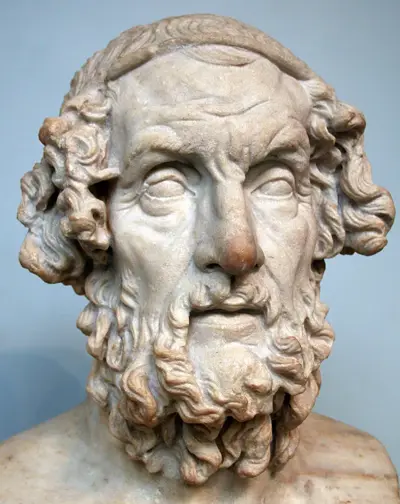
Homer (/ˈhoʊmər/; Ancient Greek: Ὅμηρος [hómɛːros], Hómēros) was the presumed author of the Iliad and the Odyssey, two epic poems that are the foundational works of ancient Greek literature. The Iliad is set during the Trojan War, the ten-year siege of the city of Troy by a coalition of Greek kingdoms. It focuses on a quarrel between King Agamemnon and the warrior Achilles lasting a few weeks during the last year of the war. The Odyssey focuses on the ten-year journey home of Odysseus, king of Ithaca, after the fall of Troy. Many accounts of Homer's life circulated in classical antiquity, the most widespread being that he was a blind bard from Ionia, a region of central coastal Anatolia in present-day Turkey. Modern scholars consider these accounts legendary.
