Whittaker Chambers Quotes
No, those ears were not created by any chance coming together of atoms in nature (the Communist view). They could have been created only by immense design.
Chambers, Whittaker. Witness. Random House, 1952, p. 16.


There are many scientists who disagree with Johnson’s very unusual logic. They point out that it is certainly possible that God initially did not have had humans in minds, and when they evolved, decided that they were worthy of salvation history and then interfered to the extent of a virgin birth. Others would point out that just because man cannot exactly foresee the exact future pattern of evolution, does not men that a Supreme Being could not have initiated the mechanism that he/she knew would result in salvation history. The Pope and the Catholic Church see no inconsistency between Darwinism and the salvation history. Then there are those non-Christians who do not believe that God ever did introduce salvation and there are many more of them than there are Christians. Then, it is possible that God just set things in motion and had more important things then micromanaging evolution on our one planet in a universe of billions of billions. Last there are those who do not believe that there is or has been a God. Of course there is the possibility that Johnson is right, and religiously he may be, but that is not subject to scientific analysis.

This quotation is noteworthy because although there are some scientists who are sympathetic to the religious fundamentalist view of the origin of the universe, they are almost always second class scientists. In this case, the scientist is a first class scientist, a Nobel Prize winner in Chemistry. So his quotation has more weight than of most others and is used more often by many fundamentalists who support the Biblical Genesis version of creation rather than the Big Bang scientific explanations and evolution. There are however many great scientists who also are people of faith in a God. They may be religious, but like most religious Americans, interpret the Bible metaphorically and symbolically rather than literally as the fundamentalists do.

This quotation is very interesting with reference to the modern debate about teaching creationism in the public schools. Two hundred years before, Shelly observed that before we can debate as to who was the designer, we must first prove that there was a design. He was skeptical, and this was before Darwin and modern astronomy. Today there are physicists who have shown how the Big Bang might have taken place without any plan, design or creation. And evolution explains how mankind and other life forms may have evolved without any specific species management or design.

The religious theology of the Church of England had accepted the fact based on Newton’s work, that the heavenly bodies followed a set of scientific laws that were themselves created by God. However, the Church could not accept the same principle when it came to the different species of humans and lower order animals. Each species they believe was created with all its characteristics by God directly and species could not change, develop, regress, go extinct unless God specifically ordained that. It was this inconsistency that Darwin was afraid would produce religious attacks on him and his notions of natural selection while astronomy and physics was treated very different theologically. Darwin delayed publishing his findings for 25 years hoping to find a religious atmosphere that would treat biology much as physics and astronomy. It didn’t come and finally he published and took the heat, which actually was not very great. With the exception of some religious fundamentalists, most other elements of society welcomed and supported Darwin’s ideas which today we realize were among the most important ever put forth in the world of science.


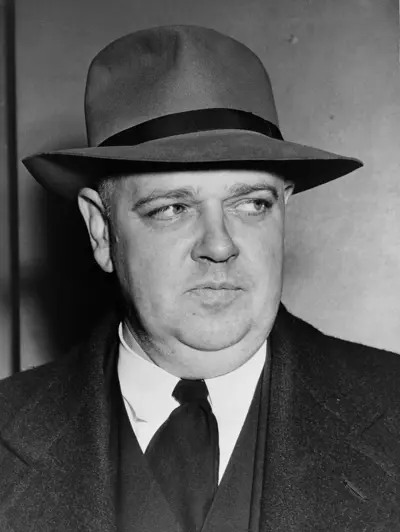
Whittaker Chambers was an American writer-editor, who, after early years as a Communist Party member (1925) and Soviet spy (1932–1938), defected from the Soviet underground (1938), worked for Time magazine (1939–1948), and then testified about the Ware group in what became the Hiss case for perjury (1949–1950), often referred to as the trial of the century, all described in his 1952 memoir Witness. Afterwards, he worked as a senior editor at National Review (1957–1959). US President Ronald Reagan awarded him the Presidential Medal of Freedom posthumously in 1984.
