Muhammad Ali Jinnah Quotes
No settlement with the majority community is possible, as no Hindu leader speaking with any authority shows any concern or genuine desire for it.
Pirzada, Syed Sharifuddin, editor. Foundations of Pakistan: All-India Muslim League Documents, 1906-1947. Vol. 2, National Publishing House, 1970, p. 267.


Powell’s views and advice to the President regarding Iraq were diametrically opposite that of Vice President Cheney, Secretary of Defense Rumsfeld and National Security Advisor Condy Rice. The President sadly rejected Powell’s advice. He was right, but he was also a trained professional staff man who maintains his loyalty and does not quit just because his advice is not taken. Many believe that if he had resigned in the political rather than military tradition, the nation might have been spared much of the loss and embarrassment the Iraq invasion and occupation cost us.

Whithead’s view which seems intuitively right to most citizens, tends to be the one that the majority espouses but the minority opposes. At the time, the Republicans controlled the White House and there were a number of polarizing issues, where the Republicans could not obtain consensus and then decided. However, then the Democrats gained control of the White House and Congress the next year, it was the Democrats who claimed that they had to decide. The Republicans, now in the majority, argued that significant changes in America should not be made by narrow majorities and major issues should be tabled if there was no substantial majority. That was the position that the Democrats had espoused when they were in the minority.

Clark had commanded the American and NATO forces in the Serbian War where all the military and political objectives were accomplished with heavy losses to the Serbian’s and none to the allied side—what many think was the most successful war in American History. Like Eisenhower in WWII one great challenge was the political and strategic one of keeping the coalition of all the allied governments working together. His perspective had been like Eisenhower and other officers in history was much wider and geopolitical than most military officers.


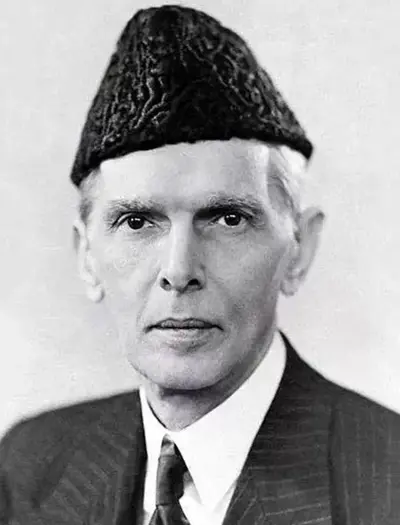
Muhammad Ali Jinnah was a barrister, politician and the founder of Pakistan. Jinnah served as the leader of the All-India Muslim League from 1913 until the inception of Pakistan on 14 August 1947, and then as the Dominion of Pakistan's first Governor-General until his death. He is revered in Pakistan as the Quaid-i-Azam ("Great Leader") and Baba-i-Qaum ("Father of the Nation"). His birthday is observed as a national holiday in Pakistan.
