James Black Quotes
No politics, no committees, no reports, no referees, no interviews – just highly motivated people picked by a few men of good judgment.
James Whyte Black, 1924-2010, Scottish Pharmacologist & Nobel Laureate, Views on how to organize a research laboratory, Quoted in Andrew Jack, "An Acute Talent for Innovation", London Financial Times, February 1, 2009
Sourced by: Eigen's Political and Historical Quotations

This was published just after his death.


Much if not most scientific research serves human needs in the long run, but does little in the short run. Pressing human needs are current. With limited budgets, governments are constantly trading off long and short run benefits and costs, and scientific research is a good example. Some scientific research, such as most space research had then, great national prestige but did not serve human needs very much, even in the long run.

The Scientific Project that developed the Atomic Bomb. Oppenheimer was the great physicist who directed the successful development of the atomic bomb so as to build the weapon before Hitler did in World War II. However, as the technology evolved, he had doubts as to the wisdom of creating even more powerful hydrogen weapons. His viewpoint was hurting the administration’s policy of rapid unlimited nuclear weapons development, and he was the victim of a character assassination whereby his security clearance was withdrawn. The “father” of the atomic bomb was the first American casualty of atomic weapons development.


This is why the American Government has played such a major role in most of the great technologies in American History. Interchangable Parts (A federal contract with Eli Whitney), Canal Construction (New York State built the Erie Canal), the Railroad (federal government gave hugh tracts of land to build the rail lines to the West), the Telegraph (No one would use it until the government financed the experiment to prove it by creating a line between Baltimore and Washington), AC Electricity, there the city of Rochester NY hired Tessler and Westinghouse to Demonstrate Generating Electricity at Niagra Falls and transmitting it over 20 miles which Edison’s Direct Current could not do), immunization (the Army Medical Corps gave the first grants to universities to develop the science of vaccines and immunization, the computer (in WWII the U. S. financed the development of computers sent to England to implement Turing’s breaking of the German “unbreakable” code), atiomic energy (the Manhattan Project—the largest scientific endeavor the world has known), the Internet (Developed with long term research funds for DARPA the future technology research arm of the Defense Department. American investors and businesspeople took each of these and developed them but the initial steps, when no capitalist dared risk on such basic and futureistic efforts were taken by American Government which probably could never have developed these technologies but the private sector could not do it with government in the role Moritz herein describes.


In the 1950s evidence was pointing to the relationship between cigarette smoking and cancer, Then scientic studes showed that cigarettes were a causae of lung cancer and ohe forms of cancer. The tobacco industry had their own research that showed that tobacco was also addicting. Rather then give up the profits they were geting from cigaette sales, the tobacco companies hired John Hill and at his suggestion formed a "Tobacco Rsearch Comittee" where the followd Hill's strategy of casting doubt on the accuracy and completeness of the research shing the causal link. Even after the Surgeon General's relase of his 1963 Report explaining the extensive evidence that was then ammassed about the danger of cigarettes. None the less there was little money to publicize the Surgeon General's report, and the tobacco companies spent a fortune hammering the message that the research was not yet sufficient and more study is needed before America puts all the tobacco farmers and cigarette ndustry workers out of jubs when the evidence was "so doubtfull". The efforts to spread the disinformation about cigarettes actually delayed the public education programs, label warnings, media focus for a few decades. Slowly there were so many people dying a year (about 1/2 million) that most Americans finally befan to see throught the deception of the industry. But that delay was resonsible for more deaths and debilitations of Americans than had suffered that fate during all the Wars in American history. They were so successful casting doubt on one of the most proven of scientic medical research, politicians picked up the same techniques do negate many otehr scientifc findings that threatened their vested interests or where the implications of the resarch cere contrary to their ideology. Climaate change denyers used the exact same techniques that the tobacco indudstry used so skillfully with cancer.

This is a classic technique used by politicians of the left and right when they are faced with scientific findings that do not comport with their ideological, religious, or political view of the world. Namely to point out that the science is not settled and the field is still in flux. Therefore, they are, that it si too early to make public policy on the basis of that. And they have little trouble finding that the scientists themselves who did the research that they do not like are the first ones to say that the science is in flux. For ALL SCIENCE IS IN FLUX and new findings are being introduced literally every day in most scientific fields. That very rarely does the new knowledge contradict the older science in huge and dramatic ways. Einstein’s Theory of Relativity turned the field of physics and mechanics upside down but it did not change the calculations that engineers and scientists would make in over 99 percent of their measurements. Within a few decades of Einsteins theory being published, it was demonstrated to be wrong—not completely wrong, but inadequate to measure the mechanics of tiny partials like electrons adn quarks. Quantum mechanics was born. And every week or so these days there is more knowledge that makes slight changes in the way we understand quantum mechanics. No science has ever remained settled for 1000 years since the beginning of scientific inquiry, By the 19th century most science did not remain settled for 100 years. In the 20th century “settled” science rarely lasted more than a decade, and in the 21st century, few are stable for even a year.


Some scientists would use this as an example of what scientific research is really like; others would argue that Ballard, however great as a field scientists and explorer, was a poor basic scientist and theoretician. He tends to work in the softer side of his science. This would be a very unusual occurrence for an experimental physicist or a molecular biologist.
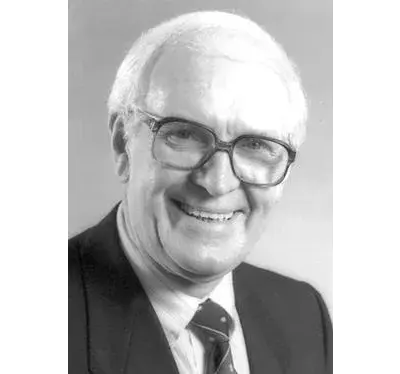
Sir James Whyte Black OM FRS FRSE FRCP was a Scottish physician and pharmacologist. Black established a Veterinary Physiology department at the University of Glasgow, where he became interested in the effects of adrenaline on the human heart. He went to work for ICI Pharmaceuticals in 1958 and, while there, developed propranolol, a beta blocker used for the treatment of heart disease. Black was also responsible for the development of cimetidine, an H2 receptor antagonist, a drug used to treat stomach ulcers. He was awarded the Nobel Prize for Medicine in 1988 for work leading to the development of propranolol and cimetidine.
