Thomas Reid Quotes
No philosophical opinion, however ancient, however generally received, ought to rest upon authority. There is no presumption in requiring evidence for it, or in regulating our belief by the evidence we can find.
Thomas Reid, 1710-1796, Scottish Philosopher, Essays on the Intellectual Powers of Man, 1785
Sourced by: Eigen's Political and Historical Quotations


This is as opposed to religion where usually we want unshakable faith, In science, we want our faith to be shakable when new data are discerned or new theories are developed.


In the late 19th century, the Sherman Antitrust Act was passed to control vicious monopolies and trusts. There were many who thought that this would be philosophically incompatible with the doctrine of free enterprise. James observed that the American philosophy required the testing of each doctrine and in the case of monopolies, the results were destructive for consumers, competitors, and society in general, with the monopolist the only beneficiary of the free enterprise where consumers and competitors lose their freedom.

The Latin means “the voice of the people is the voice of God.” See Alcuin if York {593018} for a quick history of the statement. Essentially, in science public opinion is irrelevant or at least should be. One of the major political issues in our society is whether ideology and/or public opinion should control policy and practice of scientific issues, methods, and practices.
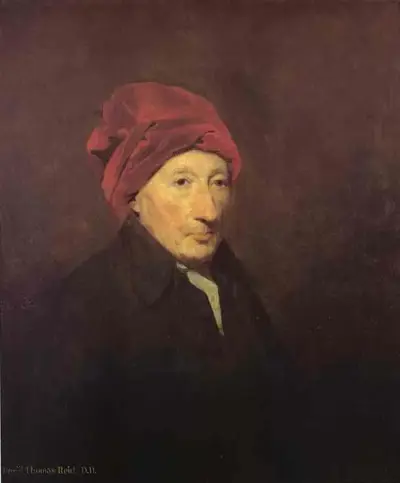
Thomas Reid FRSE was a religiously trained Scottish philosopher. He was the founder of the Scottish School of Common Sense and played an integral role in the Scottish Enlightenment. In 1783 he was a joint founder of the Royal Society of Edinburgh. A contemporary of David Hume, Reid was also "Hume's earliest and fiercest critic".
