Martin Luther Quotes
No one would be happier than Luther to be commended by the testimony of the time that he had been neither slack nor deceitful in maintaining the course of truth, but had shown quite enough and even too much vehemence.
Luther, Martin. The Bondage of the Will. Translated by J.I. Packer and O.R. Johnston, Fleming H. Revell, 1957, p. 90.


This is one of the proverbs of King Solomon of the Jews, son of King David. This quotation urges a leader to avoid advisors and appointees who do not tell the truth.

The Senator received some bad press regarding his part in the railroad rate reform issue. He believed that the stories were planted by his political enemies.


The quotation per se has no historical or political value except that is shows is that there was overt discrimination against Muslims in China in that era. Although there always have been large numbers of Muslims in China, there are few who have ever ascended to major leadership positions, under the late Emperors, under the Chinese Republic, or under the Communist Chinese regime. The graphic is a memorial to the General.


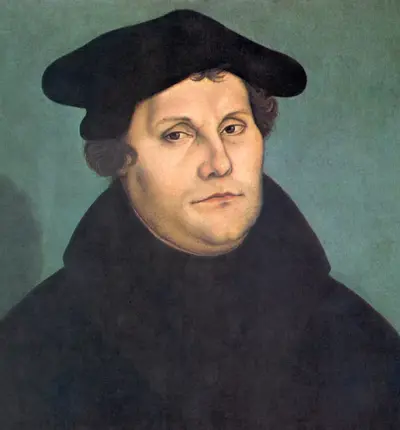
Martin Luther, O.S.A. was a German professor of theology, priest, author, composer, Augustinian monk, and a seminal figure in the Reformation. Luther was ordained to the priesthood in 1507. He came to reject several teachings and practices of the Roman Catholic Church; in particular, he disputed the view on indulgences. Luther proposed an academic discussion of the practice and efficacy of indulgences in his Ninety-five Theses of 1517. His refusal to renounce all of his writings at the demand of Pope Leo X in 1520 and the Holy Roman Emperor Charles V at the Diet of Worms in 1521 resulted in his excommunication by the pope and condemnation as an outlaw by the Holy Roman Emperor.
