Paulo Freire Quotes
No one can learn tolerance in a climate of irresponsibility, which does not produce democracy. The act of tolerating requires a climate in which limits may be established, in which there are principles to be respected. That is why tolerance is not coexistence with the intolerable. Under an authoritarian regime, in which authority is abused, or a permissive one, in which freedom is not limited, one can hardly learn tolerance. Tolerance requires respect, discipline, and ethics.
Freire, Paulo. Teachers as Cultural Workers: Letters to Those Who Dare Teach. Translated by Donaldo Macedo, Dale Koike, and Alexandre Oliveira, Westview Press, 1998, p. 42.


Note that the two do NOT ALWAYS coincide. There are those who argue that law should be respected, right or wrong. There are also those who argue that law should be respected, only when it is in the right. Note also that “respect” and “obedience” are two different things. Some people argue that law and the courts and government must have respect. Others that they are only due obedience but not necessarily respect when they are in the wrong. Still others, like Thoreau, that obedience even is not required when the law is wrong. There are those who take this to the degree that obedience to a “wrong” law is wrong and there is a DUTY to disobey a wrong law. However, a more nuanced view does not treat all laws as the same importance. I may think a particular tax is unjust and wrong, but obedience does not necessarily have moral consequences. A law that says that people with a certain religion must not be hired, however, is sufficiently immoral that I am obliged to disobey it.


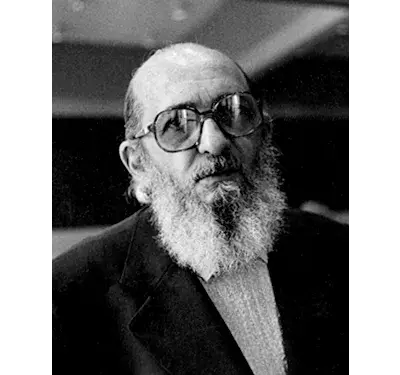
Paulo Reglus Neves Freire was a Brazilian educator and philosopher who was a leading advocate of critical pedagogy. He is best known for his influential work Pedagogy of the Oppressed, which is generally considered one of the foundational texts of the critical pedagogy movement.
