Charlotte Perkins Gilman Quotes
No matter what the belief, if it had modestly said, 'This is our best thought, go on, think farther!' then we could have smoothly outgrown our early errors and long since have developed a religion such as would have kept pace with an advancing world. But we were made to believe and not allowed to think. We were told to obey, rather than to experiment and investigate.
Gilman, Charlotte Perkins. His Religion and Hers: A Study of the Faith of Our Fathers and the Work of Our Mothers. Century Co., 1923, p. 28.


Ingersoll was considered to be the greatest orator and political thinker of his day, but his overt atheistic views curtailed his elected political career.

In 2005 an Egyptian writer, Usama Anwar Ukasha, criticized one of the Prophet’s companion’s role for causing dissention and divisiveness in Islamic history. Some called for his legal punishment for slandering a holy figure (see {588714}) and a law case was brought to force him to divorce his wife—so that she would not be “contaminated by his heretical thoughts. Al-Bana argued for freedom of thought and speech on such subjects. His view was particularly important since he was the brother of Hassan Al-Bana, the founder of the Muslim Brotherhood, a powerful fundamentalist organization. Note that Al-Bana’s call for intellectual freedom does not go so far as to say that it should be legal to criticize The Prophet Muhammad and it illustrates how far even modern Islam has to go to meet reasonable standards of freedom of thought and speech.


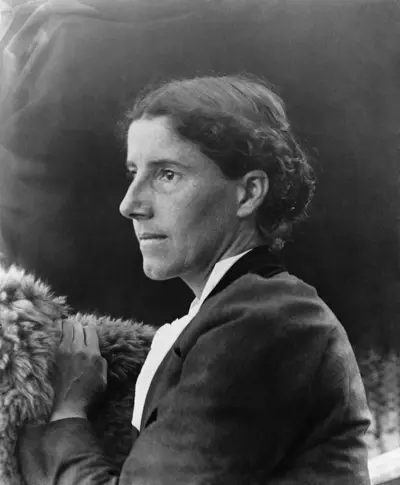
Charlotte Perkins Gilman, also known as Charlotte Perkins Stetson, her first married name, was a prominent American humanist, novelist, writer of short stories, poetry and nonfiction, and a lecturer for social reform. She was a utopian feminist and served as a role model for future generations of feminists because of her unorthodox concepts and lifestyle. She has been inducted into the National Women's Hall of Fame. Her best remembered work today is her semi-autobiographical short story "The Yellow Wallpaper", which she wrote after a severe bout of postpartum psychosis.
