Theodore Roosevelt Quotes
No man is above the law and no man is below it; nor do we ask any man's permission when we require him to obey it. Obedience to the law is demanded as a right; not asked as a favor.
At the time many of the powerful and influential upper class felt that some of the laws did not necessarily apply to them or their corporations. They bribed legislators to change laws when they were inconvenient to ignore. Roosevelt was the first President to take them on.
Theodore Roosevelt, 1858-1919, 26th President of the United States (Republican, NY State of the Union Address, December 7, 1903
Sourced by: Eigen's Political and Historical Quotations


This is one of the major reasons that the relations between police and the communities they are policing is so important. Also, the style and courtesy that the IRS tax collectors exhibit is very important.


The Egyptian Army, responding to huge demonstrations, ordered the Muslim Brotherhood President to step down in what appeared to be a coup d’etat. There was an American law that required a cut off of foreign aid to any government that had come to power. The American Administration and most of Congress did not want to terminate foreign aid to Egypt, and announced that it could not come to a conclusion as to whether or not there was a coup. They did not say that there was no coups—they just decided not to decide. Since there was no finding of a coups, there was no cutoff. Senator Paul and a few other Senators, observing that there had been a coup, wanted the administration to cut off the foreign aid even though it would be detrimental to our foreign policy. The government must obey the law they argued, regardless of the consequences.


Three Chicago Aldermen had marched on an art school demanding that a painting they found offensive be removed from public display. The police seized the painting, prompting a lawsuit.


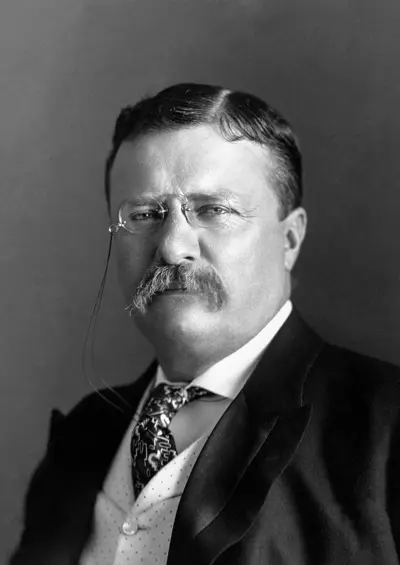
Theodore Roosevelt Jr., often referred to as Teddy or his initials T. R., was an American statesman, conservationist, naturalist, historian, and writer, who served as the 26th president of the United States from 1901 to 1909. He previously served as 33rd governor of New York from 1899 to 1900 and the 25th vice president of the United States from March to September 1901. Roosevelt emerged as a leader of the Republican Party and became a driving force for anti-trust and Progressive policies.
