Nelson A. Miles Quotes
No administration could stop the tidal wave of immigration that swept over the land; no political party could restrain or control the enterprise of our people, and no reasonable man could desire to check the march of civilization.
Miles, Nelson A. "The Indian Problem." The North American Review, vol. 128, no. 268, 1879, p. 305.


Most immigration reformers want to open immigration more widely. Ward wanted immigration restricted to certain ethnicities and limited. He wanted a uniformity of assimilation and not diversity.


Stephen F. Austin had been running ads and other promotions in the United States to induce people to immigrate to Texas, then a part of Mexico. At one point, the Mexican authorities decided that they would not allow Austin to bring in more immigrants. Austin kept advertising anyway, hoping that he could change the minds of the Mexicans. He did. Austin had lied to the settlers. Their morale remained high, they continued to come and added to Texas' strength when they arrived—much induced incomplete information and false pretenses.

Magazine of the Council of Conservative Citizens

Between 1820 and 1867, the American Colonization Society would relocate 13,000 freed American blacks to Liberia. The present-day capital of Liberia, Monrovia, is named after Monroe.


He was referring to the proposal to erect a fence between Mexico and the United States to stop illegal immigration.
It was on this date that for the first time in American History, the number of minority babies born was greater than the number of majority--white, non Hispanic—babies.

He was referring to North African and other third world immigrants. France’s second largest ethnic group had become Muslims from North Africa. But they were only 10 percent of the population.

The Christian Evangelicals in America have been split on their views of immigration. See {632917} for an example of a contrary position.


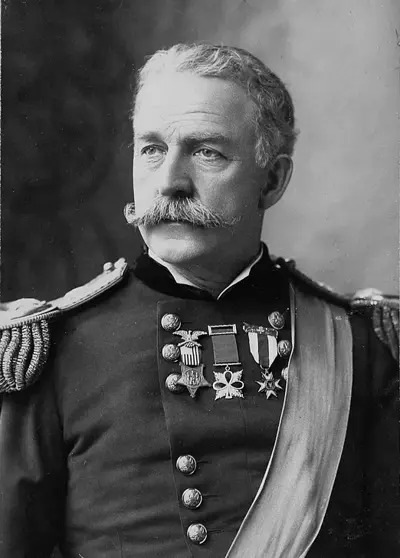
Nelson Appleton Miles was an American military general who served in the American Civil War, the American Indian Wars, and the Spanish–American War. From 1895 to 1903, he served as the last Commanding General of the United States Army before the office was abolished.
