Arthur Schopenhauer Quotes
Newspapers are the second hand of history. This hand, however, is usually not only of inferior metal to the other hands, it also seldom works properly.
Arthur Schopenhauer, 1788-1860, German Philosopher, Counsels and Maxims
Sourced by: Eigen's Political and Historical Quotations


The statement also became a book title written by Graham’s friend and colleague, Chalmers Roberts.


Abe Rosenthal, statement to a reporter who he fired for having an affair with a politician, and continuing to cover his politics. There are multiple variations of this quote in circulation – this seems to be the most accurate.


Sherman felt that the newspapers of North and South fired up hatred of one side against the other and especially in the South, falsely reported the chances of the Confederacy and made rational Southerners who wanted to minimize the death and destruction to their people were made to feel like traitors and cowards.
Sherman was one of the few military leaders who tended to always get good press coverage and who did not develop good relations with the newsmen. He tended to excoriate them although at a personal level he made a disctinction between the worst and the best.
There is a famous quote about Journalism being the first rough draft of history {602027}. Robinson was criticizing his fellow journalists and he assumed that they were familiar with that quotation.


This was the origin of the widely used phrase about news media --- “the first rough draft of history.”


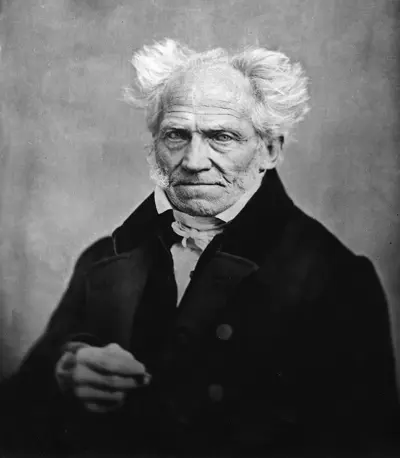
Arthur Schopenhauer was a German philosopher. He is best known for his 1818 work The World as Will and Representation (expanded in 1844), which characterizes the phenomenal world as the product of a blind and insatiable noumenal will. Building on the transcendental idealism of Immanuel Kant, Schopenhauer developed an atheistic metaphysical and ethical system that rejected the contemporaneous ideas of German idealism. He was among the first thinkers in Western philosophy to share and affirm significant tenets of Indian philosophy, such as asceticism, denial of the self, and the notion of the world-as-appearance. His work has been described as an exemplary manifestation of philosophical pessimism.
